Warren Bell, Author

Showing posts with label indie author. Show all posts

Thursday, May 1, 2014

Last Minute Books


Welcome to 'Last Minute Books' - a blog tour featuring a number of authors who would like to check that you've thought of absolutely everything for your holidays. Suitcase packed? Shoes, sandals, trainers, jeans, shorts, dresses, trousers, blouses, shirts......... sunglasses.... suntan lotion....  best smile? And, of course, forgive us do..... But your holiday reads too? Don't forget your reading device. You might prefer printed books but don't forget to pack that kindle or kobo - if that's what you prefer.


Sit back, rest, relax, enjoy the sunshine and let your mind slip away. It's holiday time. 


Let's see what questions the tour master has for our favourite authors and we'll try and find some book recommendations for you. Indeed, all our author friends have the same questions - But are their books the same? Let's see what Warren Bell has to say about holidays.


Q. Where would you recommend for a holiday, Warren?


A. Of all the holidays I’ve enjoyed, I think that the ten-day tour of Provence that my wife and I took in Southern France was my favorite. The people were warm and friendly. Highlights included everything from Roman amphitheaters built B.C. to museums housing the works of Picasso and Van Gogh.  We climbed mountains with medieval fortresses, toured five-story castles, viewed sweeping fields of Lavender, and toured vineyards and wineries. My favorite thing about Provence was the wonderful food and Rose wine. Every meal became a culinary delight. Happy waiters kept replenishing the fabulous baguettes and wine as long as we sat at the table. Unfortunately, I brought home several more pounds around my waist than I had on the trip over.


Q. What kind of a holiday do you particularly enjoy?


A.  My wife and I like to take organized tours where a skilled planner does all the work of organizing the sites, food, etc., leaving us to just enjoy our time. We especially like tours in Europe. We have been to London, Scotland, Bavaria, Switzerland, and of course Provence.  Trips with a central base hotel with day trips around the country are our favorites.


Q. If you could pack someone special in your suitcase, who would it be and why?


A. I think Franklin Delano Roosevelt.  I believe that he was one of the most indispensable men of the Twentieth Century, and I have many questions I would like to ask him. He also knew how to have a really good time.


Q. How do you relax on holiday, or you one for rushing around seeing the sights?


A. I certainly enjoy seeing the sights. Being an amateur historian, there are many places in the world I want to view first-hand. I also love to relax over a superb meal with fine wines. In my experience, nowhere are these better than in Provence.  


Q. What books would you recommend for this years holiday and why?

  1.  I would recommend anything by either Bernard Cornwell or Wilbur Smith. Of course, I would be pleased if some chose one of my novels, Fall Eagle One and Hold Back the Sun. Details and ordering information are included on my webpage. For myself, I’m currently reading Zoe Saadia’s excellent series on the Rise of the Aztecs in Mesoamerica. I’ll probably take along a couple on my laptop.


Thanks for taking part in this chat. Have a great holiday everyone. Now don't forget your last minute books. But why don't you take a short trip with me through cyber space and visit the following AUTHORS ON TOUR to see what they recommend for a good holiday read.


Sunday, February 9, 2014

The Nazi Looting of Europe’s Masterpieces

Release this week of the film, The Monuments Men, illuminates one of the darker aspects of the World War II in Europe—the systematic looting of art treasures from every country where the Nazis gained complete or partial control. I say systematic because there was nothing random about it. This crime against human culture was premeditated, meticulously planned, and carried out with utter ruthlessness.

The genesis of these crimes goes back to the character of the principal Nazi leaders. Adolf Hitler considered himself first and foremost an artist and a connoisseur of fine art. In his mad plans to make Germany the center of European government and culture, he conceived of a massive Führermuseum in his home city of Linz, Austria (then considered part of Greater Germany). Here would be stored and displayed all the major art treasures of the world. He began confiscating art objects from Germany’s Jewish citizens even before the beginning of the war.

Reichtsmarshall Hermann Goering, commander of the Luftwaffe and Hitler’s chosen successor, considered himself a Renaissance Man and coveted Europe’s fine art for his own enjoyment. Hitler put him in charge of the looting of Europe. Goering created the Reichsleiter Rosenberg Institute for the Occupied Territories (ERR) to carry out the looting. Leading Nazi Alfred Rosenberg was Goering’s deputy for this effort. Operational command went to Gerhard Utikal. The ERR became a massive, sprawling operation. Its units moved into Poland, Western Europe, and the Soviet Union close behind the conquering armies, seizing and cataloging every art treasure discovered. Heavy personal involvement in the looting by Goering assured that about half of the some 22,000 objects confiscated ended up in his private collection. Much went to other Nazi luminaries, such as Foreign Minister von Ribbentrop. Some of the looted treasures were put on display in Germany, but when the Allied bombing campaign became severe, most were secreted in bomb-proof storage, some in Berlin’s huge flak towers, others in underground salt mines.

Goering’s obsession on art theft directly affected the war with Russia. He was in Paris buying stolen art when the fateful 1942 decision to try to supply Stalingrad by air was taken. Because of his technical ignorance, Colonel General Hans Jeschonnek, assured Hitler that the Luftwaffe was up to the task. Goering knew better and was appalled to learn on the decision the following day. He was too afraid of Hitler to tell him the truth. 250,000 freezing, starving German soldiers died at Stalingrad.

After the invasion of Normandy and the breakout by George Patton’s 3rd Nazis began frantic efforts to get all the art remaining in France back to Germany. The French Resistance made superhuman efforts to keep these treasures in France. The 1964 movie, The Train, starring Burt Lancaster, first brought the art-looting problem to public awareness. It relates the efforts of French railway men to shuttle an entire trainload of French cultural wealth around France until captured intact by the Allies. The Monuments Men, the story of the Allies significant effort to rescue Europe’s cultural heritage, has the potential to educate a far wider audience of the sordid Nazi effort to lot the continent.

Note: Warren Bell is a historical fiction author with two novels released and for sale either for Kindle or in paperback from Amazon.com. Both are set during WWII, with Fall Eagle One taking place in Europe, and Hold Back the Sun is set in the war in the Pacific.

Sunday, February 2, 2014

Another Voice of Anguish Stilled


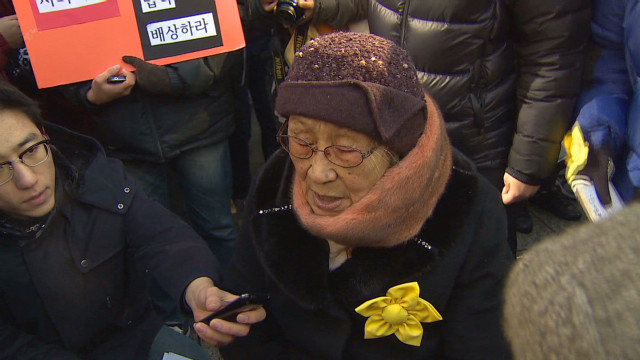
Last Sunday, Hwang Keum-ja, one of the few remaining Korean sex slaves of the Imperial Japanese Army (“comfort women”) passed away in a hospital in Seoul, South Korea. She died of lung and respiratory disease at the age of 89.

Forced into prostitution at the age of 16, Hwang was forced to serve in “comfort stations’ throughout World War II in several conquered countries. The life of these women can only be described as a living hell. On duty seven days a week, they were forced to have sex with as many IJA soldiers as showed up at the brothel. Hwang later said that she was unable to even stand up at the end of most weekends. She endured these torturous circumstances for several years before being abandoned in China at war’s end.

Making her way back to Korea, Hwang survived by collecting and selling garbage from the streets. Late in her life, she suffered hallucinations about being attacked in her home. She lived a life of great poverty, but this did not keep her from becoming one of the most outspoken advocates for the former sex slaves. Right up to the time of her death, Hwang regularly took part in demonstrations outside the Japanese embassy in Seoul demanding a formal apology from Japan and direct reparations to the individual women. There was precedent for their demands.

Early in the Pacific War, the U.S. government unconstitutionally imprisoned over 100,000 Americans of Japanese ancestry in internment camps. These citizens lost everything they had and had to endure concentration camp conditions for the remainder of the war. Nevertheless, thousands of the young men volunteered to serve in the U.S. armed forces. The army formed them into a segregated regimental combat team, the 442nd was the most decorated unit in the entire U.S. Army.

Later U.S. administrations recognized the horrible injustice visited on these Japanese-Americans. Congress passed a resolution of apology and appropriated funds to compensate the internees in part for their suffering. Today’s Americans are appalled that such a thing could have happened in our country. Over 200,000 Korean women were enslaved as IJA “comfort women.” Only 55 of these women are left alive. Hwang Keum-ja and her sisters are asking nothing more than what the U.S. provided to its internees.

My World War II novel, Hold Back the Sun, touches on the IJA sex slave system. A villainous Japanese officer plots to enslave the Dutch heroine as a “comfort woman” for causing him to lose face. He could not conceive of a more terrible fate. Neither could I as the author.

Note: Warren Bell is a historical fiction author with two novels released and for sale either for Kindle or in paperback from Amazon.com. Both are set during WWII, with Fall Eagle One taking place in Europe, and Hold Back the Sun is set in the war in the Pacific.

Friday, January 3, 2014

Shifting My Mind to a Different War


I spent yesterday afternoon polishing the draft of the first chapter of my new novel, Asphalt and Blood. To do so, I had to shift the focus of my mind forward a good twenty years. My first two novels, Fall EagleOne and Hold Back the Sun, take place during the Second World War. Asphalt and Blood tells the story of how the U.S. Navy’s Seabees helped the Marines retake Hue City during the 1968 Tet Offensive.

As I worked through my manuscript, I was mentally transported back to Vietnam during the war there. I spent seventeen months “in country” during two tours as the Operations Officer of a Seabee battalion. My second deployment was to Hue/Phu Bai to the north of Danang. We first arrived there less than six months after the Tet battle, and I became very familiar with the area over the next nine months. Talking with people who were there, I learned that Seabees had a significant presence during the fighting. Thus was born the spark that led to my present project.


After over forty years, my memories of Vietnam are still vivid. Most Americans think of that country as one big rain forest. This may be true of the far south, but the areas in which the Seabees mostly worked were quite different. The northern part of the former Republic of Vietnam is more like parts of Southern California, with rolling hills covered with scrub growth. The beaches along the South China Sea are wide bands of fine white sand—a beautiful tourist area waiting to be developed. The coastal plains around Hue are a sea of iridescent green rice fields stretching from the blue mountains inland to the sea. Given the climate and peace, the farmers there can grow three rice crops per year. These wiry people are some of the hardest working in the world. Our problem was that some were carrying AK-47s after dark.

Another reason I wanted to write Asphalt and Blood is to tell the story of the Seabees in popular fiction. Many of us who served there found our experiences far different from what most Americans envision. Reading press reports during the Tet Offensive, we began to wonder what war the reporters were viewing. What those of us there witnessed was akin to the Battle of the Bulge in 1944. The VC that came out to fight in big unit battles had some initial successes but were then savaged by American forces. From that point forward, the principal enemy was the North Vietnamese Army. Tactically, the Tet Offensive, launched over the objections of Field Marshall Giap, was a disaster. The media turned it into a political victory for the enemy.

I still hesitate to believe everything I see in press reports. Thirty years later, when members of my family were serving in Iraq, I asked them about their take on reports on that war. Their answers were that media reports bore small resemblance to what was actually happening. Don’t get me wrong. I am a staunch defender of press freedom. I just believe that reporters have a responsibility to “tell it like it is.”

Asphalt and Blood is scheduled for release next Labor Day.  As far as exhaustive research will allow, readers should expect an accurate description of the Battle of Hue City.

Note: Warren Bell is a historical fiction author with two novels released and for sale either for Kindle or in paperback from Amazon.com.  Both are set during WWII, with Fall Eagle One taking place in Europe, and Hold Back the Sun is set in the war in the Pacific.

Saturday, December 28, 2013

WHY I’LL REMEMBER 2013


The newspapers during the last few days have contained many reviews of 2013. Many of them are gloomy.  The U.S. Congress remained gridlocked during the year, stumbling from one crisis to another. The government was forced to shut down for several days. Fights over the implementation of the “Affordable” Health Care Act dominated politics and the news. Nelson Mandela passed away. The giants appear all gone, and mere humans are left to grapple with the problems of our times.

2013 was far kinder to me. When the year began, I was struggling to market my little-known novel, FALL EAGLE ONE, about a Nazi attempt to kill FDR. Sales were very modest, and I had few ideas about how to spread the word about my book. But I had asked my daughter, Karen Williams, to help me mount an Internet marketing campaign as my Christmas present. In late winter, we began the effort.

I already had a Facebook page, but it needed a lot of updating. Then Karen introduced me to Twitter. As soon as I grasped the “expanding ripples” effect of Twitter, I took to it readily.  Carefully studying how successful authors were using the media, I realized that one had to widely publicize the works of other authors to get them to publicize mine. I began devoting over an hour per day to Internet marketing. Meanwhile, Karen was building an author’s website for me.

By April 2013, FALL EAGLE ONE had climbed into the upper one percent of Kindle sales and has hovered in that range for the remainder of the year. It has 43 Amazon.com reviews with a 4.5-star out of 5 average rating. I spend about an hour and a half a day on marketing, but it has paid off handsomely.

I completed my second novel, HOLD BACK THE SUN, in the summer of 2013. Another World War II yarn, my new work follows the adventures of two U.S. Asiatic Fleet lieutenants during the opening months of the Pacific War. Karen built a YouTube trailer, which appears on my website. We launched the Kindle version of the new book in early August, and it quickly began to sell. When Amazon.com subdivided its bestseller lists in autumn, HOLD BACK THE SUN appeared as #8 in the historical fiction/Asian category. It soon climbed to #3 and has been in the upper 10 all year. It has 28 Amazon.com Reviews with a 4.3-star out of 5 average rating.

My third book, ASPHALT AND BLOOD, is already in the works. It will tell the story of how the U.S. Navy Seabees aided the Marines during the Battle for Hue City during the Vietnam War. My target launch is for Labor Day 2014.

I shall always remember 2013 as the year I could truthfully add the title, “author,” after my name.

Note: Warren Bell is a historical fiction author with two novels released and for sale either for Kindle or in paperback from Amazon.com.  Both are set during WWII, with Fall Eagle One taking place in Europe, and Hold Back the Sun is set in the war in the Pacific. Karen Williams, Marketing for Authors specializes in Marketing and PR for Independent Authors.  She can be reached through her website or at karenwilliamsmarketing@gmail.com.

Friday, December 20, 2013

The Disruption of Identity Theft

Last weekend, my wife, Annette, and I were the victims of identity theft. The incident is still under investigation, so I’ll not reveal all the details. Our incident was not as serious as some, but it completely disrupted our lives for several days.

On Saturday, we held a book sale and signing in Norfolk, Virginia. We had the best sales of any similar event to date, so left for Williamsburg feeling very satisfied. After fighting through a driving rainstorm, we arrived safely at home. Annette tallied up the finances of the event and them did some work on line. On a whim, she checked our bank accounts. Red flags began slapping her in the face.

Someone had gotten into one of our credit card accounts and advanced a large sum of money to our checking account. They were in the process of transferring smaller sums from that account into other bogus accounts at the bank, then withdrawing it at once. We were fortunate that Annette discovered the scam so soon. A frantic call to the bank’s 24-hour number got all the accounts frozen and stopped the hemorrhage. After we filed a fraud report, the bank made us whole. The bank, however, is currently out several thousand dollars.

Then the cleanup began.  Since this was a sophisticated hacking, we had to close all our accounts with the bank and open new ones. Consequently, we had to contact all the sources of our revenue and change the account to which our direct deposits are made. Even more complicated, we had to contact every establishment to whom we had agreed to automatic drafts from our accounts and change them also.  This has taken the better part of a week to accomplish. The big bugaboo was avoiding additional charges for returned and late billings. We’re not sure that we’ve plugged all the holes yet. We still have to contact all the charities that take monthly amounts from our credit cards. One of our remaining headaches is that we have to physically go to our bank branch to conduct business until the changes are all in place. Another requirement of the bank was that our computers be completely scanned for viruses.  We use have an Imac computer, but the scan did find some weaknesses, which have been repaired.


Internet banking can be a wonderful convenience. Vulnerabilities to hacking can turn it into a nightmare. As violated as Annette and I feel, our experience must pale before the realities of people who have had new credit cards and accounts opened in their names by identity thieves. Many have had their credit completely wrecked by these heartless criminals. We have credit monitoring in place to spot such activity early. Everyone who uses the Internet for financial transitions should do likewise. I leave you with one further piece of advice: NEVER write a check and use a credit card issued by the same bank at a single establishment on the same day!

Note: Warren Bell is a historical fiction author with two novels released and for sale either for Kindle or in paperback from Amazon.com.  Both are set during WWII, with Fall Eagle One taking place in Europe, and Hold Back the Sun is set in the war in the Pacific.

Friday, November 8, 2013

The Blessings and Disappointments of a Long Life

By Florida Memory, via Wikimedia Commons

This week I read a novel by one of my favorite mystery writers, Faye Kellerman. In it, she was describing the parents of her protagonist. The father was 77, the wife, 75. Both were described in ways that made clear that they were elderly. These characters were the same ages as my wife, Annette, and me, but we don’t look on ourselves as elderly.

Long life can be both a blessing and a curse. Watching your children and grandchildren grow from infants to young adults can be a blessing. We are proud of all our children and grandchildren, although they are each a singular person with individual personalities. My wife and I are blessed with devoted partners who treat life as a great adventure to pursue together. We were blessed with successful careers that provided a secure retirement. We’re blessed with a shared love of vocal music and many years of singing together in church choirs. Retirement can yield the time to pursue old dreams, as I am now with my writing and Annette does with her Master Gardening.

Living many years also gives one a long view of history. In a meeting with a group of young adults a few years ago, I was asked what I thought was the most significant thing I had witnessed in my life. My answer came instantly, “The civil rights revolution.” This surprised my young listeners. Having been born after the 1960s, they had no conception of how bad circumstances were for African Americans in the south during the last years of “Jim Crow.” When the market crashed in 2008, many of us older investors didn’t panic. We’d been through downturns before and knew to ride it out. I doubt that anyone under thirty really understands living under the constant threat of nuclear annihilation, as we did during the Cold War. Yet we didn’t buckle under the pressure.


Time does not always result in progress. People my age remember when Congress used to actually function. Leaders of both parties conferred with the President and worked out compromises all could live with. Politics was not nearly as nasty as it has become in recent years. Compromise was recognized as essential to the democratic process, not viewed as caving in on one’s principles. The country moved forward. Watching the dysfunction of Washington today is heartbreaking to one who loves this country.

I remain thankful for a long life and good health, but most of all for my good luck in choosing a life partner. I suppose one day we really will get old, but we’re doing everything we can to stall that inevitability.


Note: Warren Bell is a historical fiction author with two novels released and for sale either for Kindle or in paperback from Amazon.com.  Both are set during WWII, with Fall Eagle One takes place in Europe, and Hold Back the Sun is set in the war in the Pacific.

Friday, November 1, 2013

Getting Technical Facts Right in Fiction Writing


While enjoying a fairly new mystery thriller set more or less in the present, I read about military guards being armed with M1 carbines. This was something of a jolt for me, because I know that the early Vietnam years were the latest that U.S. armed forces regularly used this weapon. In many other novels, some by highly popular authors, I often discover similar anachronisms, such as placing in WW2 fiction weapons not then developed. I’ve seen some authors use the words revolver to describe all pistols. I have found many other questionable technical details in popular fiction. For some reason, this really bothers me, especially because the right information is so readily available today on the Internet.


I believe an author has a responsibility to make his fiction as plausible as possible. Getting the details right is essential to complete plausibility. For knowledgeable readers, and there are hoards of them out there, hitting an obviously wrong detail interrupts the flow of the prose and may cause irritation. This isn’t a good reaction for the author.


Before penning both of my novels, a spent many hours in exhaustive research. When I first began writing, this required lots of time in libraries. I treat research as a puzzle, digging for the answer I want until I discover it. Only when I’m convinced that I’m on firm ground do I plunge ahead with the writing.


The dogfights in my new novel, Hold Back the Sun provide an example. My Dutch protagonist, Captain Garret Laterveer, is flying an obsolescent Brewster Buffalo against modern Japanese Army (IJA) and Navy (IJN) fighters. I read everything I could find both in print and on the Internet about the actual experience of Dutch pilots early in the Pacific War. Surprisingly, some of them had success, especially against the Army Nakajima fighters in Malaya. The IJN Zeros were another matter. At the time, this aircraft was probably the best fighter in the world. Yet some Dutch pilots did shoot them down. In my research, I found that the Brewster aircraft had a number of the same strengths and weaknesses of the P-40 fighters used successfully against Zeros by the Flying Tigers. Applying artistic license, I allowed the Dutch to use Flying Tiger tactics.


I know the old saw, “Never let the facts get in the way of a good story,” and I have used it myself to alter history to make the plot go the way I want it. However, I do not believe this justifies incomplete research. Our readers deserve our best efforts.

Saturday, October 19, 2013

A Shameful Secret of World War II: Sexual Slavery in the Axis Armies

Korean Comfort Women held by the Japanese Imperial Army

The first scene of my new novel, Hold Back the Sun, takes place in Madam Kitty’s, a posh Gestapo brothel in Berlin. Nazi friends are giving a going-away party for the book’s chief villain, a Japanese Military Attaché.  Madam Kitty’s was an actual establishment located at the address I give it in the novel. Its purpose was to ply foreign diplomats with liquor and sex, and then extract secret information from them during “pillow talk.” All the rooms were bugged to capture the conversations on recordings.


I did not mention it in my novel because it did not fit into the story, but almost all the prostitutes in Madam Kitty’s were in fact sex slaves, the wives and daughters of political prisoners. The Gestapo gave these women a stark choice: become espionage prostitutes or have their loved ones executed.


All three of the Axis armies of World War II were supported by systems of military brothels. Compelling evidence exists that at least the Germans and Japanese employed conscripted sex slaves. What little has been written about the Italian Army suggests that they primarily utilized professional Italian prostitutes.


During the peak years of the war, the German Army and the Gestapo operated some 500 military brothels. Researchers have reported that some 34,000 women conscripted from the conquered races or from concentration camps worked in these entertainment houses. Ironically, when they became, ”worn out,” many were placed in concentration camps for the crime of prostitution. Perhaps because of the utter devastation of Nazi Germany and the fact that Stalin’s Army committed what has been called, ”the greatest mass rape of women in history,” during the conquest of East Germany, the suffering of Germany’s sex slaves has gone largely unmentioned in history.


By far the largest employment of military sex slaves was by the Japanese Army. After discipline broke down during the “Rape of Nanking,” the Army staff decided that providing the soldiers with their own prostitutes was necessary for “good order and discipline.” Detailed planning for the conquest of Southeast Asia included provision of Ianfu (Comfort Women) units down to at least the battalion level. Hard pressed to fill these units with volunteers, the Army resorted to deception and mass kidnappings. During the course of the war, over 200,000 Asian women from territories under Japanese control were conscripted, the vast majority from Korea. But thousands of women from China, the Philippines, Indonesia, Malaya, and other subject nations shared their fate. In Java, some 300 Dutchwomen were also enslaved. At least sixty were kidnapped from internment camps and placed in “comfort stations.” What they endured can only be described as a months long gang rape. Unbelievably, the suffering of “front line” Ianfu was even worse. Many were forced to entertain up to 40 “clients” per day while living in primitive conditions and being fed barely enough food to keep them functioning.   


Very few of the Japanese responsible for these crimes against humanity ever had to pay for their actions. Only those officers and noncoms responsible for the kidnappings and rapes in Java were tried by the Allies after the war. The officer held primarily responsible was hanged. Perhaps because of the racial attitudes of the time, the plight of the Asian women was largely ignored.


During the 1980s and 1990s, many of the former Ianfu came forward to tell their stories and demand compensation. In 1994, one of the Dutchwoman, Jan Ruff-O’Herne, wrote of her ordeal in her book, Fifty Years of Silence. After a long period of outright denial, one Japanese president finally offered something of an apology. A fund was set up for the Comfort Women, but payouts are minimal considering what these war victims endured.


I have long been troubled by the plight of the Japanese Army’s sex slaves. When I began writing HoldBack the Sun, I decided to illuminate these war crimes in my novel. I hope that I have done an adequate job.


Friday, October 11, 2013

Recharging the Batteries


Warren Bell at the Matterhorn
To visit Switzerland is like visiting at least three different countries. The northern regions were affected by Germany, and Swiss-German is spoken in this area. The eastern part of the country borders France. French influence dominates the east, and French is the everyday language. The southern part of Switzerland abuts Italy, and many here speak Italian. The best features of neighboring cultures has been absorbed and morphed into a uniquely Swiss flavor.  

Switzerland has two official languages (Swiss-German and French) and a third semi-official one – Rumantsch, the aboriginal tongue. While not an “official” language, most Swiss people also speak Italian. And we Americans gripe about having to study a single additional tongue?

My wife, Annette, and I spent 10 days in this wonderful country in September and early October. Most of our time was spent absorbing the sights and local food and learning something of the culture. I stored all these details in my brain with relish. Visiting new places and learning about their culture is like recharging the batteries of the intellect. 

One fact I learned long ago is that while all humans may look alike, it can be dangerous to predict what others will do based only on your own culture. All humans come with the same “hardware” in their brains. The “software,” however, may be quite different and varies by culture. Years ago, I coined the phrase, “cultural programming,” to describe this phenomenon.

When writing about characters from cultures other than their own, writers can

easily fall into the mistake of having them react as, say, Americans would.  Even
more dangerous is for political leaders to fall into this trap (consider the Pacific War, Vietnam, and the Gulf Wars). In my new novel, Hold Back the Sun, I write about how Americans miscalculating the Japanese mind made the Pacific War inevitable.   


Authors can avoid such mistakes by carefully studying the culture of the characters about whom they write. Actually visiting the countries involved is the most effective way to do this, but careful document and Internet research can also yield satisfactory results.  Due diligence is the key.


Surprisingly, I didn’t gain any weight during our Swiss tour.  I certainly ate enough food. The one that made the most impression on me was Rösti, hash brown potatoes cooked in butter. The Swiss serve them with many meal, and they are delicious beyond description. Fortunately for my waistline, we also spent a lot of time climbing steps and mountain slopes to burn off all the calories.    


My batteries are fully recharged now. Book launch for the paperback version of Hold Back the Sun is coming up on October 25th, so I have work to do!  

Note:  Warren Bell's debut novel, Fall Eagle One, can be purchased at Amazon.com in either Kindle or Paperback form.  His newest novel, Hold Back the Sun, is available for Kindle, and the Paperback version will be available October 25th. 

Friday, October 4, 2013

Tom Clancy: The Man Who Invented a Genre

 Tom Clancy signing books at the Burns Library, Boston College

I was planning to write this week’s blog post about my holiday here in Switzerland, but fate intervened. Just two days ago, those of us who write in the action/adventure genre lost a luminary who blazed the trail for those of us who are fascinated by military technology and love to share it with our readers. Tom Clancy was a pioneer who literally invented a new genre.

 In 1984, the venerable Naval Institute Press (NIP) published its first work of fiction, the product of a Maryland insurance salesman who liked to pal around with naval officers. Before being accepted by NIP, Tom Clancy had received rejections on The Hunt For Red October from a number of subsequently sorry publishing houses. Then something magic happened. Someone gave a copy of The Hunt For Red October to then-President Ronald Reagan. On his way to a helicopter to Camp David, the President was asked by a reporter what book he was carrying. The President told him the title and added, “It’s a really great thriller!” Sales of the book skyrocketed.

Tom Clancy’s debut novel was unique in that it included detailed descriptions of revolutionary Soviet submarine technology and the technical wonders employed by the U.S. Navy to locate the rogue Russian craft. It was the birth of a new genre, the “techno-thriller.” The book took the bestseller lists by storm. NIP continued the trend the following year with Stephen Coonts’s first novel, The Flight of the Intruder, a work crowded with cutting-edge aviation and weapons technology. Clancy soon returned with Red Storm Rising and Patriot Games. The Hunt For Red October and Patriot Games became blockbuster motion pictures. Tom Clancy was now a giant in the publishing industry.

Clancy was a pioneer who opened up many additional markets to the writing community. He branched out from his highly successful series of Jack Ryan thrillers to write non-fiction books on weapons systems and military units. Taking advantage of the technology explosion, he successfully entered the field of electronic war games. But the anchor of his empire remained the military-political-thriller arena. Jack Ryan rose through the CIA to eventually become Vice President and then President. Not happy with the policies of his successor, he returned to politics. Those of us who loved the series expected to be reading much more of Ryan’s story.

Tom Clancy was only sixty-six years old when he abruptly left us. This was much too young for the world to lose such an influential author. There had to be so many more adventure tales cooking in his fertile brain. But he leaves behind a whole school of adventure writers who employ the techniques he pioneered. He will be long remembered. Rest in peace, Father of Our Genre!

 Photo courtesy of: By Gary Wayne Gilbert (Flickr) [CC-BY-SA-2.0 (http://creativecommons.org/licenses/by-sa/2.0)], via Wikimedia Commons

Thursday, October 3, 2013

Warren Bell becomes an Amazon Best Selling Author


My newest novel, "Hold Back the Sun," just became an Amazon Best Seller. It is currently #8 on the Historical Asian Fiction Best Seller List wherein only the top 100 are included.

The Kindle version of the book, "Hold Back the Sun," was released in advance of the paperback Book Launch, which is scheduled for October 25, 2013.

Saturday, September 28, 2013

Mixing Business with Pleasure

University of Zurich Library

When I was a young man just beginning my working life, my father warned me, “Never mix business with pleasure.” What he was talking about in the culture of 1950s South Arkansas was not to begin romantic entanglements with women at work. Although I think that Dad’s words are still good advice, I realize that the majority of romantic pairings in America today begin in the workplace. However, in the sense of having fun and moving forward one’s career simultaneously, it is possible to mix business with pleasure.

I am blogging today from beautiful Zurich, Switzerland, where my wife and I are on a tourist trip. Switzerland is a wonderful place to be. The scenic beauty is spectacular; the cities are clean and attractive; public transportation is efficient and plentiful. But most wonderful of all are the Swiss people. They are extremely courteous and friendly. Many go out of their way to help obviously puzzled tourists find their way around.  And very important for many of us, they all speak excellent English; they are also very tolerant of Americans who speak only English. The Swiss make visiting their country a great pleasure.

For a historical novelist who writes mostly about World War II, Switzerland is also a treasure trove of information and descriptive background. Zurich was the headquarters of Allen Dulles and a major office of the Office of Strategic Services (OSS), the precursor to the CIA. From here, spies were dispatched and ran all over Nazi-occupied Europe. It was at the University of Zurich’s technical university that an OSS agent sat in on a lecture by Werner Heisenberg, head of Germany’s nuclear program, in December of 1944. If the agent determined that production of a German atomic bomb was imminent, he had the authority to shoot Heisenberg on the spot. With all thier actions potentially useful in future novels, my tourist visit has also become a research expedition.

For years I have been cataloging details about countries and cities I visit for possible future use in my writing. Taking lots of photographs of sites I may later use in my writing allows first-hand knowledge of how to write descriptive prose about these places. My favorite saying from the WWII German Field Marshal Rommel is, “Nothing is as important as going and seeing for yourself.”

So it is possible and profitable to mix business and pleasure after all.

Note: Warren Bell's debut novel, Fall Eagle One, detailing a fictitious but plausible assassination attempt on FDR during World War II, (Semi-Finalist in the Kindle Indie Book Review Best Books of 2012) is available for Kindle or in paperback on Amazon.com. His newest novel, Hold Back the Sun, has been released for Kindle in advance of the printed book launch on October 25, 2013. This new historical-fiction thriller, set in the Pacific, follows the US Asiatic Fleet in their battle with the Japanese in WWII.

Friday, September 20, 2013

The Art of Sensual Writing

Photo: the-reddot.com

“In this class, we’re going to explore the art of sensual writing,” said the professor in introduction. The setting was a lecture room at the University of Maryland Creative Writing Institute.

Great! thought the six students., of which I was one.  He’s going to teach us how to write steamy sex scenes. It soon became evident that the professor had something altogether different in mind. First, he reminded us of the primary definition of “sensual:” Of the body or senses as distinguished from the intellect or spirit (Webster’s New World Dictionary). The senses--hearing, smelling, tasting, seeing and feeling. Then he described what he meant by “sensual writing.”

In our creative writing class, we learned to attempt to let our readers experience the situations we dreamed up rather than just reading about them. Our British friends have a wonderful expression for this, “Putting one in the picture.”  Consider the following two approaches to a situation (from my latest novel, Hold Back the Sun). Fleeing from the invading Japanese, the protagonist is entering a hotel in Central Java seeking shelter.

Unadorned writing:  Frank walked through the open door and went straight to the check-in desk.  A large number of refugees crowded the lobby.

Sensual writing: When Frank walked through the door, his eyes took in a brightly lit, teeming lobby. He had to elbow his way through a throng of desperate Dutchmen, Brits, Australians, and Americans to reach the check-in desk.  Although the high, coffered ceiling deadened some of the sound, their raucous chattering bombarded his ears. The rank odor of countless unwashed bodies brought the taste of bile to his throat.

I believe that the second example gives the reader a much better grasp of the setting.  (I must caution that the paragraph isn’t precisely what is actually in the book. I modified it to include all of the senses). Most of those who have written reviews of my work on Amazon.com tend to agree with my approach. Many praised the descriptive nature of my writing. The few who have been more critical of my work disagree. They feel that the detail makes the story drag. At present, the ratio is about 7:1 in favor of descriptive detail.

I intend to continue, “putting my readers in the picture” to the best of my abilities. I’ll let my readers decide whether I’m on the right track by their purchases.

Note: Warren Bell's debut novel, Fall Eagle One, detailing a fictitious but plausible assassination attempt on FDR during World War II, (Semi-Finalist in the Kindle Indie Book Review Best Books of 2012) is available for Kindle or in paperback on Amazon.com. His newest novel, Hold Back the Sun, has been released for Kindle in advance of the printed book launch on October 25, 2013. This new historical-fiction thriller, set in the Pacific, follows the US Asiatic Fleet in their battle with the Japanese in WWII.