Warren Bell, Author

Showing posts with label WW2. Show all posts

Tuesday, February 6, 2018

Growing Up in a Lumber Yard

Me, about 10,  with my bicycle in front of our porch
In an earlier blog post (Our Home-Life at the End of the Depression), I wrote about my earliest memories of my family and the circumstances of our daily life before World War II. In this post, I am writing about the years just afterward.

The death of my grandfather, George Luther Bell, brought significant change to our family dynamic. My grandmother, Clyde Bell, then had nowhere to live except with us.

Grandma Bell was totally blind, the result of a non-malignant brain tumor pressing on her optic nerves. This left her close to helpless. Had she lived in the present age instead of the late 19th and early 20th Centuries, an early operation might have restored her sight. My grandfather spent everything he had or could earn trying to find a cure, but the most the doctors of the time could recommend was to try to keep her comfortable. So the tumor grew year by year, horribly distorting the shape of her skull. Grandma required a great deal of attention, and most of this responsibility fell on mother. Being a good Christian woman (think Olivia on The Waltons), she just added the work to her already heavy burdens, never neglecting either her husband or her children. The old saying, “Man’s work is measured by the sun, but a woman’s work is never done,” was never truer than in the case of my mother.

Mother sitting on our front porch in 1950
The immediate problem occasioned by “Pappy’s” death was living space. There was no way that room could be found in our little “shotgun” house to accommodate Grandma. The Reynolds and Gambles Lumber Company, for whom Dad was planing mill foreman, assigned us another company-owned house. Our new home was a typical frame structure of the period. It stood on numerous timber piers to level the floor. This helped keep it cool in summer but made for cold floors in winter. Wide, vertical pine boards with narrow battens sheathed the exterior. Like the other half dozen or so houses in the “camp,” no paint graced the exterior surfaces. A covered porch ran along the front of the structure.

Our “street” was nothing but a bare strip worn in the white sandy soil by car tires. It ran in a fairly straight line out to the South Field Road (named for the rich oil field that petered out in the 1920s), which was covered with red clay and gravel. The nearest hard pavement was a mile or more away at the south edge of El Dorado.

The house interior was divided into four rooms of approximately equal size by walls faced with “shiplap” boards. The room at the main front entrance became our parents’ bedroom/parlor. Mom claimed the room behind it as her new kitchen. My brother, Tom (who is four years my senior), and I were housed in the second front room, which also had an outside entrance. The room behind that was Grandma’s room.

The “camp” had no source of central heat or cooking, no electricity, or running water. Mom cooked on a wood-fired cast iron “range.” We had one sheet metal wood heater in the parlor. A well in the backyard provided water. We took “sponge baths” with washbasins or, on Saturday, bathed in a galvanized washtub behind the kitchen stove.

The soil behind the house was tillable, so Mom soon had a large vegetable garden going. Beyond the garden stood a “two-holer” “necessity,” as they are called here in Virginia.

Tom and I were in charge of keeping Mom supplied with fuel for her cook-stove. Dad would bring home loads of “cut-offs” from the mill. These were usually about a foot or so long. The soft Southern Pine boards split easily into narrow billets for Mom to burn. I became adept at using a hatchet at an early age.

Surrounding our home to the north and east were hundreds of stacks of drying lumber. A level grid of wooden platforms called “trams” spread from the sawmill over a large area. These were about twelve feet wide and anywhere from a few inches to several feet above the ground according to the terrain. Dense stacks of lumber bordered the trams on both sides. At the sawmill, yard hands placed the freshly sawn boards on carts and rolled them out on the trams to the first open area. The men then layered the green boards in stacks to air dry. The layers were separated by 2-inch by 2-inch oak stacking sticks, allowing free circulation of air between the boards.

The proximity of the trams and stacks provided numerous temptations for growing boys to have fun or get into trouble. Stacking sticks became vaulting poles or, with 2x4 footholds nailed on, stilts to walk on. The tall trams also created large shaded areas in which to play in the hot summer months.

We had our own secret place beneath the trams where we kept forbidden treasures. Tobacco and cigarette papers were easy to come by. Dad smoked roll-your-own cigarettes made with Prince Albert Tobacco. He purchased it in packages of about a dozen cans. A waxed paper insert inside each can kept the tobacco moist and fresh. Dad discarded a can when he could no longer easily rake out the desired amount. His finger left small fillets of untouched tobacco in the bottom corners. Tom and I would sneak into the trash and remove the paper inserts from the cans, then pour all the leftover tobacco together. Dad also liked to use a thick book of cigarette papers and discarded the thin packets of papers that came with the cans. We kept these treasures buried in a coffee can under the tram and often sneaked there to roll our own and fire up. We thought we were acting grownup. I don’t think I actually knew any men who did not smoke in those years.

Sometimes, we would also get our hands on some plug or leaf chewing tobacco. I gave that up after Mom almost caught us chewing and I had to swallow my “chaw.”

When Tom wasn’t around to get stuck with minding me, I played alone near or under the house. I frequently built clay dams in the drainage ditches beside the house. Sometimes, I would blow them up with firecrackers like those I has seen dynamited in movies. Otherwise, Dad would tear them out to prevent flooding.

On hot summer days, Mom would get up before daylight and have all her housework done by the time Dad came home for the noon meal, which we called dinner. After policing up after the meal, several other wives from the camp would come over to our house. Grandma had two large oscillating fans that her sister had given her. The ladies would sit in her room to keep cool and talk during the heat of the afternoon. They must have thought I was too young to understand, because they would talk about anything in front of me. I remember that a lot of their conversations concerned their husbands’ faults and who had the worst husband.

Another interesting terrain feature near our home was a tall oil tank berm. During the earlier oil boom, a series of large oil tanks lined the west side of the South Field Road. After the oil played out, the oil companies removed and salvaged the tanks but left the circular containment berms in place. Most were breached to let water out, but a few intact ones became shallow ponds. The one beside out house was dry. The slopes provided places to play “cowboys and Indians,” “cops and robbers,” and other boy games. We would “fort up” atop the cliffs and pretend to be under siege.

Pretending to be cowboys was our predominant game. Before World War II, all the boys had metal cap guns. We also had little lead soldiers painted with WWI uniforms. The war put an end to that. The best toys available during the conflict were guns and dolls made of glued together sawdust. Any of these left out in the rain quickly dissolved. As the war went on, Tom and I made many of our own toys out of lumber cutoffs.

Our mode of transportation was mostly “shank’s mare,” i.e. walking around on foot. As we grew older, we graduated to bicycles. When I first started to school, Tom and I walked from our home to Southside Elementary School, a distance of about two miles. Later, we rode our bikes.

Saturdays were always a treat for us boys. Mom and Dad would go to town to shop for the week. On the way in, they would drop us off at the Majestic Theater. On Saturdays, the theater showed a double feature of “B” westerns with short serials in between. The movies showed constantly. One could stay in the theater as long as it was open. The management let parents come into the auditorium to pick up children they had left there. I remember being given two dimes when we were dropped off. One got us into the movie, and the other was for snacks. Sacks of popcorn and full-sized candy bars cost five cents. I always bought two Mars Bars, one to eat at once and the other to eat between shows. After our parents picked us up, we usually went to a hamburger joint for supper before going home. Those were really great burgers. As soon as we got home, our battery-powered radio was turned on to WSM in Nashville for the Grand Old Opry.

I suspect that modern youth would consider the way we lived to be abject poverty. We never felt poverty stricken. We had a roof over our heads and three nutritious meals a day. We always had clean clothes to wear. But most of all, we had parents and other family who loved us and taught good Christian values that have guided us through our long lives. What more could one ask for?

The Japanese attack at Pearl Harbor brought significant changes to our lives. For more on those times, see my July 13, 2013 blog post, "World War II Through the Eyes of a Child.”

Share This Post


Warren Bell is an author of historical fiction.  He spent 29 years as a US Naval Officer, and has traveled to most of the places in the world that he writes about.  A long-time World War II-buff, his first two novels, Fall Eagle One and Hold Back the Sun are set during World War II.  His third novel, Asphalt and Blood, follows the US Navy Seabees in Vietnam.  His most recent novel, Snowflakes in July, is a Pentagon thriller about domestic terrorism.  He is currently working on a new novel, Endure The Cruel Sun, the sequel to his best-selling novel, Hold Back the Sun. For more about Warren Bell, visit his website at: wbellauthor.com or see him on twitter @wbellauthor.

Wednesday, May 10, 2017

Hell in the Coral Sea

Seventy-five years ago, in the far reaches of the Pacific Ocean northeast of Australia, a new type of naval warfare entered the arena of history. For the first time, two naval forces did battle without ever coming within visual sight of each other. Although neither side could claim a clear-cut victory, the Battle of the Coral Sea changed the course of World War 2 in the Pacific. Many in Australia believe that it prevented the invasion of their homeland by the Japanese Empire.

Historians continue to debate whether or not the Japanese planned an actual invasion of Australia. However, there is no question that the Japanese High Command intended to isolate the island continent and force its government out of the war.

May 1942 came at the end of a long string of spectacular Japanese victories. Having smashed the American Battle Fleet at Pearl Harbor, the Japanese armed forces ran rampant through Southeast Asia, seizing Malaya, Singapore, the Philippines, and the Dutch East Indies. Allied naval and military efforts to slow the Japanese juggernaut had been brushed aside with seeming ease. As the remnants of American, British, Dutch, and Australian forces tried to regroup in Australia under the command of General Douglas MacArthur, prospects for survival of the Commonwealth appeared dicey.

IJN (Imperial Japanese Navy) Vice Admiral Inoue Shigemi, Commander of Japan’s Fourth Fleet, had worked out an intricate plan with his Army counterparts for further expansion in the Southwest Pacific.  The same land and naval forces would be used over and over. First, the Navy would move down the Solomons Chain to the southeast, securing the big islands of Bougainville and Guadalcanal, on which airfields could be built. Tulagi, with its large lagoon suitable for operating the big Kawanishi flying boats, would be occupied at the same time. Once the eastern flank had been secured, a combined force invasion of the Australian base at Port Moresby on New Guinea’s south coast would follow.

With Port Moresby at his disposal, Inoue’s bombers would be in a position to attack northeast Australia. Meanwhile, he would regroup his ships and Army forces to advance across the Coral Sea to seize New Caledonia, Fiji, and Samoa. With his bombers based on those islands, Australia would be completely isolated. Cut off from help from her Allies, the island continent would have no choice but to sue for peace.

Admiral Ernest King, Commander in chief, U.S. Fleet, was gravely concerned about the possible isolation of Australia. To prevent such a circumstance, he had ordered Admiral Chester Nimitz at Pearl Harbor to keep at least one aircraft carrier task force in the Coral Sea. Aircraft from these vessels had decimated the enemy bomber forces based at Rabaul and struck invasion shipping off the north coast of New Guinea. As the Japanese began to set their new plan in motion, a task force of two U.S. aircraft carriers and their supporting ships moved into the Coral Sea.


American and Japanese forces northeast of Australia began to converge. Rear Admiral Kōsō Abe’s Port Moresby Invasion Force was central to the situation. The Japanese admirals’ job was to protect it and support its landing. The American admirals’ objective was to prevent the landing from taking place.

Abe’s force sortied from Rabaul on 4 May and proceeded southward across the Solomon Sea, heading for the eastern tip of New Guinea. Admiral Sadanichi Kajioka’s light cruiser and six destroyers joined up during the day. After supporting the landings at Tulagi, The light carrier Shōhō and the heavy cruisers and destroyers of Rear Admiral Aritomo Gotō’s Covering Force put in at Bougainville to refuel. Meanwhile, Vice Admiral (VADM) Takeo Takagi’s Carrier Strike Group was steaming south on the east side of the Solomons, turning left to thread between Guadalcanal and Rennell Islands to enter the Coral Sea. 

The Japanese and American carrier forces were closely balanced. VADM Takagi had sister ships Shōkaku and Zuikaku, both first line fleet vessels. Rear Admiral (RADM) Frank Jack Fletcher had Lexington and Yorktown. The air groups were similarly balanced. Fletcher had 44 Wildcat fighters, 74 Dauntless dive-bombers, and 25 Devastator torpedo bombers, a total of 143. Takagi had 36 Zero fighters, 54 Aichi dive-bombers, and 54 Kate torpedo planes, a total of 144 aircraft. Both admirals were surface warfare officers. Both delegated control of actual air operations to their senior aviator subordinates: RADM Chūichi in the case of Takagi, RADM Aubrey Fitch in the case of Fletcher.

Fletcher had the advantage in intelligence. Allied codebreakers were just beginning to read JN25, The IJN’s main fleet code. Regular reports from both Australia and Hawaii fed him the composition, targets, and movements of the Japanese forces. The enemy planned to land troops at Port Moresby on 10 May. Their Carrier Strike Force would probably operate close to the invasion site.

Early on the morning of 5 May, the American task forces rendezvoused about 400 miles south of Guadalcanal. Admiral Fletcher consolidated his forces into a single Task Force 17. Task Force 44 now became Task Group 17.3 and remained so for the rest of the battle. In preparation, the task force spent much of May 6 refueling from the Neosho. The tanker then sailed to a rally point to the south, hopefully out of range of the Japanese carrier planes. With full fuel tanks, TF 17 headed toward the Jomard Passage between the western tip of New Guinea and the Louisiade Archipelago, through which Abe’s invasion force must proceed.

During 6 May, the opposing forces played a game of “blind-man’s-bluff.” Both carrier forces kept reconnaissance planes aloft, searching the seas where they believed their enemy to be. Neither commander was limited to his shipboard resources. American B-17s staging through Port Moresby sighted and attacked Abe’s convoys several times during the day. No hits were scored, but the Army reported the location of the enemy units to Fletcher. Takagi could count on Kawanishi flying boats from both Tulagi and the Shortland Islands near Bougainville, ground-based bombers from Rabaul, and the cruiser floatplanes of the other Japanese groupings.

Admiral Fletcher ordered Australian RADM John Gregory Crace’s cruiser Task Force 17.3 to break off from the carrier force and race ahead to block the Jomard Passage at the earliest possible moment. Heavy cruiser U.S.S. Chicago joined that force, along with three modern destroyers.

While Admiral Crace’s ships raced westward, both carrier commanders were reacting to faulty scouting reports. Just after 0700, one of Shōkaku’s reconnaissance planes reported a carrier, a cruiser, and three destroyers. A few minutes later, a second Shōkaku aircraft confirmed the sighting. Excitement permeated the Japanese aviators. They were eager to get aloft and sink the American carriers. Admirals Takagi and Hara concurred. By 0815, thirty-six Aichi dive-bombers and twenty-four torpedo planes with an escort of eighteen Zeros were on the way to the reported sighting.
But what the scout planes had actually found was the oiler Neosho and destroyer Sims.

Meanwhile, at 0815, a Dauntless dive-bomber from Yorktown discovered heavy cruisers screening the Port Moresby invasion force. The pilot mistakenly reported the sighting as two carriers and four heavy cruisers. Believing that his scout had found the Japanese carrier force, Admiral Fletcher ordered every available plane into the air. Ninety-three aircraft sped off the decks of Yorktown and Lexington: 18 Wildcat fighters, twenty-two Devastator torpedo planes, and 53 SBD Dauntless dive-bombers. Both the Japanese and American air fleets were pursuing the wrong targets.

While the American carriers were launching aircraft, a cruiser floatplane from Fururaka found the actual American carrier force. A few minutes later, another floatplane confirmed the report. The Japanese admirals faced a quandary. Were the Americans operating in two carrier groups? Confused, they decided to go ahead with the attack in progress but turned to close the distance to the second sighting.

The Japanese air armada found Neosho and Sims at about 0930. Soon realizing that these were the only ships in the area, the pilots radioed back for instructions. Their admirals realized at once that the American carriers must be between them and the invasion convoy. They ordered their planes to sink the oiler and destroyer and return to their ships as quickly as possible. Without air cover, the two American ships stood no chance. The torpedo bombers and fighters headed home at once. The dive-bombers attacked the American ships. Hit by three bombs, Sims broke in half and went down. Seven bombs hit Neosho. The Japanese left her drifting and sinking.

Just after 1000, American Army B-17s reported an aircraft carrier, ten transports, and sixteen warships a little south of the earlier Dauntless sighting. Now convinced that he had found the main enemy carrier force, Admiral Fletcher diverted his air fleet to the new targets.

At 1040, the American strike group found the Shōhō. Lexington’s dive-bombers began the attack.  The SBDs of Bombing Squadron Two peeled off and screamed down at the enemy aircraft carrier. In the midst of their dive, fighters from the Japanese Combat Air Patrol (CAP) jumped the dive-bombers. One staggered in the air and then went spiraling down in flames. Below, the carrier was zigging and zagging in violent maneuvers. Amazingly, not a single bomb hit the target. LCDR Robert E. Dixon’s SBDs of Scouting Squadron Two then had their turn. Two 1000-pound bombs struck the carrier. Flames began to pour out of the sides of her hangar deck.


[Explanation of Dive-Bombing]

Yorktown’s planes went after the stricken ship. Five torpedoes plowed into the crippled ship. The carrier went dead in the water just as the SBDs of Yorktown’s air group began their first dives. The Yorktown pilots hit the almost stationary carrier with another ten or twelve bombs and two more torpedoes.

Just after 1130, the ravaged carrier slid beneath the waves, becoming the first carrier sinking of the Pacific War. Not knowing that their prey was the light carrier, Shōhō, the Americans thought that they had sunk a first-line fleet carrier. LCDR Dixon got the honor of reporting the results of the battle to Admiral Fletcher.

“Scratch one flattop,” Dixon radioed, coining the term by which carriers would be known for the rest of the war.

Just before 1300, a Japanese floatplane sighted RADM Crace’s cruiser force steaming westward. The pilot reported that the force contained a battleship and two carriers. Still waiting for his strike force to return from sinking Neosho, VADM Takagi diverted two groups of land-based bombers from Rabaul toward Crace’s position. One flight contained twelve G4M Betty twin-engine torpedo bombers. The second was nineteen Mitsubishi G3M Nell horizontal bombers.  Admiral Inoue also ordered Admiral Abe to turn his invasion convoy around and remain in the Solomons Sea until the forthcoming carrier battle was decided.

At around 1430, U.S.S. Chicago’s air search radar picked up two large formations of aircraft approaching from the north. Admiral Crace ordered his ships into a diamond formation to give each vessel maneuvering room to dodge torpedoes and bombs. All the Allied ships were at General Quarters with every gun manned and ready.

A storm of anti-aircraft fire shot out toward the attackers, some of whom were actually lower than the gun positions. Every five-inch, four-inch, and smaller caliber gun within range poured out fire at its maximum rate. Shells burst all around the sea- skimming aircraft. First one, then another took hits and plowed into the sea. Yet the remaining enemy pilots pressed home their attacks, dropping their fish at what would have been maximum range for American torpedoes.

Both Australia and Chicago turned into the attacks, going bow first in the direction of the incoming torpedoes. With consummate skill, both captains “combed” the oncoming wakes, allowing the weapons to pass harmlessly on either side of the cruisers. The flanking destroyers likewise maneuvered to avoid the deadly fish.

The Bettys came on at low altitude, machine-gunning the targets as they passed over. The light anti-aircraft guns on the ships scored numerous hits, sending two more of the enemy planes into the drink.

Chicago’s radar reported another formation approaching from astern at 18,000 feet. Lookouts throughout the Allied force scanned the sky, but they were staring directly into the sun. The Japanese air commander was obviously a wily veteran. Allied captains had learned early in the war to watch for bomb release from attacking aircraft.

The captains of Australia and Chicago began to corkscrew their ships about the sea. Every pair of binoculars in the task group locked onto the falling bombs. The volley aimed at the American cruiser missed by a narrow margin. But Australia disappeared in a typhoon of towering bomb splashes. Miraculously, the Australian cruiser emerged from the huge waterspouts without any visible sign of damage.

Five-inch and four-inch shells began to burst among the Japanese formations. First one, then another of the bombers burst into flames and spiraled downward. A few minutes later, two more of the Nells were hit. The entire gaggle of aircraft turned and sped off to the north.

The Japanese aircraft commander reported to Rabaul that he had sunk a California-Class battleship and damaged another battleship and a cruiser. In fact, the only casualties on the Allied fleet were from shrapnel.

Admiral Crace ordered the Task Group to turn south and increase the range from Rabaul. Since the enemy obviously knew where he was, Crace was not constrained by the need for radio silence. He reported to Admiral Fletcher that he could not complete his mission without air cover. Still hoping to hide his carriers, Fletcher did not respond.

Shortly after Admiral Crace turned away from Rabaul, Admiral Takagi received a report from another floatplane from Kamikawa Maru that Task Group 17.3 was steaming southeast. Both Japanese admirals assumed that the reported force was Fletcher’s aircraft carriers. A few calculations established that the American ships would be within aircraft range later in the day.

Excitement energized the Japanese air staffs. A late afternoon strike against the Americans seemed possible. Admiral Hara ordered that eight torpedo bombers fly scout missions in the direction he believed the American ships to be.

After his air group returned from crippling Neosho, Hara selected the most experienced crews to hit the Americans. Commanded by Pearl Harbor hero LCDR Kakuichi Takahashi, twelve dive-bombers and fifteen torpedo planes were soon headed to the west on a course of 277°. Scout planes ranged ahead searching for the American fleet. The Japanese formation flew above solid cloud cover as they searched for the American ships. At one point, they flew within forty miles of TF17. Meanwhile, the big radars on the American carriers picked up and tracked the Japanese force. Every available fighter was scrambled to protect the carriers. The Yorktown vectored four Wildcats to intercept the enemy attack planes. Flying below the overcast, the Wildcats would be invisible until the last moment.

Just before intercepting, the Wildcats popped up through the clouds right behind the enemy formation. Lacking their own fighter support, the Japanese pilots were at a great disadvantage. They immediately dumped their ordnance to gain maneuverability. When the ensuing melee was finished, over half the Japanese torpedo planes had gone down, along with one of the dive-bombers. The remaining planes were scattered. One of the Wildcats had succumbed to defensive fire from the bombers.

A little after sunset, several enemy dive-bombers flew over the American carriers. Apparently believing them to be their own ships, the Japanese pilots began circling as if to land. Antiaircraft gunners on the American destroyers opened up and drove the dive-bombers away.

Ignoring the threat of submarines, gutsy Admiral Takagi ordered his ships to turn on their searchlights to guide his surviving planes back to his carriers. Nevertheless, another eleven aircraft ran out of fuel and had to ditch. Twenty-one of the twenty-seven aircraft sent out never made it back to their ships.

After being informed of the results of battle on May 7th, Admiral Inoue postponed the invasion of Port Moresby by two days.

Dawn on May 8th found both American and Japanese commanders eager to pinpoint the location of their enemies. Takagi got search planes aloft first, launching seven torpedo bombers at 0615. Exercising tactical command, RADM Fitch sent out eighteen SBDs twenty minutes later to conduct a full 360-degree search.

The weather situation had changed radically overnight. The warm frontal zone that had shielded Fletcher’s forces the day before was now over the Japanese ships. Lexington and Yorktown cruised beneath clear skies with seventeen nautical miles visibility.

A Lexington SBD sighted the Japanese carriers through a hole in the clouds at 0820. Just two minutes later, one of Shōkaku’s torpedo planes sighted TF17.

The two fleets launched their strike forces almost simultaneously. At 0915, the Japanese sent out a combined force of 33 dive-bombers, 18 torpedo planes, and 18 Zero fighters. The American carriers launched individual strike forces. By 0915, Yorktown put up six fighters, 24 dive-bombers, and 9 torpedo planes.  Lexington sent nine fighters, 15 dive-bombers, and 12 torpedo planes out by 0925.

Yorktown’s strike group found the Japanese at 1032. With Zuikaku hidden beneath a rain squall, the dive-bombers concentrated on Shōkaku. Fiercely harried all the way through their dives by the 24 Zeros of the Combat Air Patrol (CAP), the SBDs planted two 1000-pound bombs near the bow of the ship, peeling back the flight deck and starting raging fires in the hangar below. Fortunately for the Japanese, none of the torpedo planes was able to hit the carrier.

Four of Lexington’s dive-bombers arrived at around 1125. Two attacked each carrier, scoring only one more bomb strike on Shōkaku, further damaging her flight deck. The other Lexington SBDs failed to find the enemy ships in the heavy cloud cover. Lexington’s torpedo bombers launched 11 fish, none of which hit their targets.

With Shōkaku now unable to launch or land aircraft, Takagi released her to return to the Japanese base at Truk. The air group now aloft would all have to land on Zuikaku when they returned.

Fletcher’s force had the powerful advantage of radar. The powerful set on Lexington picked up the incoming Japanese strike force. Air controllers vectored nine Wildcat fighters out to intercept the enemy planes. Expecting the Japanese torpedo planes to fly at low altitudes, six of the Wildcats flew too close to the sea to make contact.

Deprived of the aircraft lost the night before, the Japanese torpedo group commander had too few planes to mount a full attack on both American carriers. He decided to concentrate on Lexington, the larger target with a bigger turning radius. Fourteen aircraft went after the big ship, while only four went after Yorktown. Defending Wildcats and SBDs shot down four of the attackers. Antiaircraft fire destroyed four more. But the remaining bombers attacked Lexington in a pincer movement, coming in from both port and starboard bows. Despite radical maneuvering by the ship’s captain, two deadly 24-inch torpedoes plowed into the big carrier. The first fish ruptured the aviation gasoline tanks, allowing deadly fumes to escape and spread throughout the ship. The second torpedo cut the water main on the port side of the ship, requiring the shutdown of some boilers.

About four minutes after the torpedo attacks, 19 dive-bombers from Shōkaku nosed over and went after Lexington. Four CAP Wildcats tried to disrupt the attack, but escorting Zeros cleared the way. Only two 550-pound bombs hit the carrier, starting additional fires. However, damage control parties soon had all fires under control, and the ship regained a speed of 24 knots. Aircraft operations continued unabated.

Yorktown seemed to have a charmed life that morning. All four torpedoes launched at the ship missed. CAP Wildcats then disrupted the attack by fourteen Zuikaku dive-bombers, and only one bomb struck the ship. However, near misses buckled some fuel tanks, leaving an oil slick trailing behind the ship.

By noon, all Japanese aircraft had withdrawn. CAP fighters and SBDs shot down an additional Zero, 3 torpedo bombers, and a dive-bomber. The opposing strike groups ran into each other on their return flights. The senior Japanese air commanders were killed in these dogfights.

Back on Zuikaku, Admirals Takagi and Nara were jubilant. Incoming reports indicated that both American carriers had been sunk. But when their aircraft began to land, the severity of their losses became apparent. Of the 69 aircraft sent out, only 46 made it back to Zuikaku. Twelve of these were so badly damaged that they had to be pushed over the side. Only four torpedo planes, eight dive-bombers, and 24 Zeros remained operational.

The initial damage assessment on the American ships found both carriers damaged but able to continue air operations. This rosy conclusion changed radically at 1247, when a tremendous explosion racked Lexington. Fumes from the ruptured gasoline tanks had spread throughout the ship, and electric sparks had triggered an ignition. In the next hour, a series of violent explosions continued to ravage the ship. By 1600, the fires were uncontrollable. Abandon Ship was ordered at 1707. Admiral Fitch and Captain Frederick C. Sherman, the CO, were the last to leave the ship alive. Of the 2951-man crew, 216 went down with the vessel.

The opposing commanders now took stock of the situation. Both found their ships alarmingly low on fuel. Takagi had the fleet oiler, Tōhō Maru, waiting in the Solomons. But Fletcher had lost Neosho. With no fuel supply available short of either Australia or New Caledonia, his operational options were severely limited. With only thirteen fighters left to defend his force, he decided to withdraw from the Coral Sea. Although he had won no decisive victory, he had heavily damaged one first-line carrier and so savaged the air group on another to the point that she would be out of the war for months. And he had achieved his strategic objective.

After consulting with Admiral Inoue. Takagi also decided to withdraw. In his view, he had won a great victory. With no carriers available to support his landing forces, Inoue felt compelled to call off the Port Moresby invasion and return his units to Rabaul. For the first time since the war began, a Japanese invasion force had been forced to abandon its mission.

Although he had won no decisive victory, Fletcher had heavily damaged one first-line carrier and so savaged the air group of another that she would be out of the war for months. And he had achieved his strategic objective. Port Moresby remained in Allied hands and would for the rest of the war. Japan’s plans to isolate Australia and force her out of the war were now in shambles.

Share This Post


Warren Bell is an author of historical fiction.  He spent 29 years as a US Naval Officer, and has traveled to most of the places in the world that he writes about.  A long-time World War II-buff, his first two novels, Fall Eagle One and Hold Back the Sun are set during World War II.  His third novel, Asphalt and Blood, follows the US Navy Seabees in Vietnam.  His most recent novel, Snowflakes in July, is a Pentagon thriller about domestic terrorism.  He is currently working on a new novel, Endure The Cruel Sun, the sequel to his best-selling novel, Hold Back the Sun. For more about Warren Bell, visit his website at: wbellauthor.com or see him on twitter @wbellauthor.

Friday, April 29, 2016

Built in the 1930s - All Original Parts - Some Still Work

Warren recovering in his favorite recliner.

For several years, I have seen t-shirts advertised with the above caption. I always meant to get one. I was, after all, born in 1936. But now it’s too late. I don’t still have all my original parts. Last Monday my orthopedic surgeon flattened the surfaces of my left knee, cut mortises in the new surfaces, and installed a full knee replacement joint. My weight is now borne through plastic bearings onto titanium alloy surfaces. I am already walking on the new joint (with a walker). There is some pain, but I can manage it. And for the first time in 33 years, both my legs are the same length.

My surgeon and anesthesiologist used a series of pain blockers that delayed the onset of pain for about twenty-four hours. When I initially woke up from the operation, I felt hardly any pain at all. I was able to do all the exercises ordered by my physical therapists with no problems. I was beginning to think that this operation was a snap when the pain blockers started to wear off. That got my attention in a hurry!

The second day following the surgery was definitely the worst as far as pain was concerned. One just has to tough it out! Almost continuous therapy to straighten and then flex the new joint can definitely be quite uncomfortable. So can using a walker be. I mastered that art fairly quickly; it seemed to come natural to me. However, throw rugs are booby traps of the most serious order. All our rugs are now piled in the dining room.

It appears that how fast I will be able to get “back to battery” will depend largely on me. The harder I work, the better off I’ll be.  And the sooner I’ll get back to writing on Endure the Cruel Sun, the sequel to my best-selling novel, Hold Back the Sun.  The Battle of the Coral Sea beckons.


Warren Bell is an author of historical fiction.  He spent 29 years as a US Naval Officer, and has traveled to most of the places in the world that he writes about.  A long-time World War II-buff, his first two novels, Fall Eagle One and Hold Back the Sun are set during World War II.  His third novel, Asphalt and Blood, follows the US Navy Seabees in Vietnam.  His most recent novel, Snowflakes in July, was released on September 15, 2015.  He is currently working on a new novel, Endure the Cruel Sun, the sequel to his best-selling novel, Hold Back the Sun. For more about Warren Bell, visit his website at: wbellauthor.com or see him on twitter @wbellauthor.  


Friday, May 1, 2015

Illegitimis non Carborundum

Loosely translated, the title Latin phrase means, “Don’t let the bastards grind you down.” It is one of the many mottos of the U.S. Navy’s legendary Seabees. “Can do!” is the most common Seabee motto because of their ability to always get the job done quickly. Another is, “We have done so much for so long with so little that now we can do anything with nothing.”

In the long history of the Navy, Seabees are of fairly new origin. In late December 1941, Rear Admiral Ben Moreell, Chief of the Bureau of Yards and Docks, was gravely concerned about the loss of life among civilian construction workers on the Pacific islands that the Japanese had conquered. Realizing that a uniformed Naval Construction Force would be required for the island-hopping campaigns that lay ahead, Moreell proposed the formation of Naval Construction Battalions made up of skilled construction workers. The concept was approved early in 1942. Part of the approval was the authority to grant naval rank based on years of experience in the construction industry.  The initials C.B. spawned the nickname, “Seabees.”

Admiral Moreell approached the Construction Trades Council of the labor unions for help in recruiting construction experts. As a quid pro quo, the admiral promised that Seabees would never be used in the continental U.S. in competition with the civilian construction industry. Thousands of skilled construction men were soon flooding recruiting offices. Many were the men who had built the prodigious public works of the New Deal era.

After a short boot camp in Virginia, the new Seabees were sent to Davisville, Rhode Island, or Port Hueneme, California, and formed into battalions officered by members of the Navy Civil Engineer Corps. One of the Davisville Seabees designed the iconic fighting bee emblem for which the units became famous. Construction battalions were soon deploying to the far-flung battlefronts.

Seabees went ashore at Guadalcanal a couple of weeks after the Marines first landed. They finished the new airfield (Henderson Field) begun by Marine engineers and started building the piers, housing, roads and other facilities necessary to a modern fighting force. With the Japanese Navy bombing and shelling the airfield on a regular basis, Seabees camped in bunkers alongside the runway. As soon as the “all clear” was sounded, they rushed out with their equipment and pre-positioned materials and filled in the holes and installed new steel plank pavement. The Marines were full of praise for how the Seabees kept Henderson Field operating in those crucial months of 1942.

The teenaged Marines were also astounded by how old some Seabees looked. The official average age of the World War II Seabee was 37.  The actual average was much higher. Men in their sixties lied about their age in order to serve. The young Marines developed the saying, “Never hit a Seabee. He may be some Marine’s father!” The Seabees adopted the Marine slogan, “Once a Marine, always a Marine,” into “Once a Seabee, always a Seabee.”  There are no such things as “former Marines” or “former Seabees.”

Over 325,000 Seabees served in World War II.  Besides constructing sprawling based and airfields throughout the Pacific, the Seabees also built and fought on six continents. The amphibious landings at Sicily and Normandy would have been impossible without the Seabees and their pontoon causeways and Rhino ferries. A Marine on Iwo Jima paid the Seabees perhaps the ultimate compliment when he posted the following poem on a roadside sign:

            And when we reach the isles of Japan
            With our hats at a jaunty tilt,
            We’ll enter the city of Tokyo
            On roads that the Seabees built!

Seabees have played pivotal roles in all of America’s conflicts since WWII.  Seabee- placed pontoon causeways allowed the Marines to cross the seawall at Inchon in Korea, reversing the course of the war. Twenty-two active duty and reserve Seabee battalions built the critical ports, bases, roads, and airfields the U.S. forces used in Vietnam. Desert Shield, Desert Storm, Operation Iraqi Freedom, and the military operations in Afghanistan would not have been possible without widespread Seabee support.

Last month, I spent a weekend at a reunion of Seabees from Naval Mobile Construction Battalion Forty. I was Operations Officer of this battalion in 1968 and 1969. My experiences there formed the basis of my Vietnam War novel, Asphalt and Blood. We old Seabees swapped sea stories and generally enjoyed each other’s company.  We also dedicated an NMCB 40 plaque at the Navy Memorial and visited the Vietnam Wall and Korean War Memorial. Although few of us retained the slender bodies of our youth, we still have Seabee fire in our bellies. All retain a fierce espirit de corps and pride in being a Seabee. I felt honored to be in the presence of these valiant Americans and their families.

Friday, August 1, 2014

The Nature of War


I write historical novels about war. My first book, Fall Eagle One, is about World War II in Europe. My second novel, Hold Back the Sun, is set in the opening months of the Pacific War in the Western Pacific. Asphalt and Blood, which is at the copy edit phase, tells the story of U.S. Navy Seabees in the Vietnam Battle for Hue City.

In order to write about war, one must understand it. I spent over 29 years in the U.S. Navy, of which seventeen months were in Vietnam. I hold the Navy’s Combat Action Ribbon. An amateur historian all my life, I have concentrated my studies on WW2. From personal experience and rigorous study, I believe that I have an understanding of modern warfare.

War is, by its very nature, barbaric and horrific. The purpose of war is to impose one’s will on the enemy through the use of military force. War is not a duel, with rules to assure that one opponent has no advantage over the other. War is successful only when the enemy loses the will to resist.

In today’s Washington Post, Eliot A. Cohen, former Counselor of the U.S. State Department, argues persuasively that many in today’s Washington, D.C., do not understand the nature of war. He points out that President Abraham Lincoln hated war as much as anyone on earth, yet he understood that winning the American Civil War required his generals to break the will of the Confederate population to continue the struggle. I assert in Fall Eagle One that Union generals invented the modern concept of Total War as it was practiced in WW2. The “scorched earth” campaigns carried out by General Sheridan in the Shenandoah Valley and General Sherman’s March to the Sea in Georgia speak for themselves. Photographs of Richmond, Virginia, after its surrender look much like those of Berlin in 1945.

Only rigorous application of force makes possible a rapid conclusion of hostilities and a minimization of total casualties. Following the suicide bombing of U.S. Marines in Lebanon early in his administration, President Reagan ordered Caspar Weinberger, the Secretary of Defense, to develop a new doctrine for the use of military force. The resulting “Weinberger Doctrine,” sometimes called the “Weinberger/Powell Doctrine,” espoused the following: 
  1. military force should only be used as a last resort in situations where key national interests are involved, 
  2. military force should only be used in situations where a large majority of the U.S. public supports its use, and 
  3. when military action is taken, it should be in such overwhelming force that the ensuing conflict is concluded quickly, thereby minimizing overall casualties. 
This doctrine governed U.S. military involvements through the NATO actions in the Balkans during the Clinton Administration. 

Unfortunately, sometime during the run-up to the Vietnam War, the competing doctrines of “Just Enough Force” and “Proportionality” crept into the conduct of war. For years, the U.S. attempted to apply just enough military pressure to force the North Vietnamese to give up their conquest of the South. When Moshe Dayan, the former Defense Minister of Israel, visited Vietnam in the 1960s, he was asked how the U.S. could end the war. His answer was direct: take the war to the enemy’s homeland. Because obliterating North Vietnam’s capacity to continue fighting was not even being considered, the Vietnam War dragged on for years.

“Proportionality” implies that, when attacked, the response should be no more severe than the attack. This doctrine seems especially attractive to reporters in the news media, who ask about it continually when interviewing combatants. “Proportionality” calls for a “leveling of the playing field,” a minimization of one side’s military advantages. In the context of warfare, “proportionality” guarantees prolonged conflict, which in turn maximizes total casualties. Pursuing this course is anathema to any competent military commander.

War is not some game. People suffer and die in war. It is not, as Chancellor Bismarck argued, simply “Diplomacy by other means.” As I said earlier, war is both barbaric and horrific. I believe that Secretary Weinberger and General Powell got it right on the use of military force.  Franklin Roosevelt, Winston Churchill, Joseph Stalin, and Harry Truman all understood the nature of war and applied overwhelming force to end WW2. Current world leaders could emulate their wisdom.

Note: Warren Bell is a historical fiction author with two novels for sale either for Kindle or in paperback from Amazon.com. Both are set during WWII, with Fall Eagle One taking place in Europe, and Hold Back the Sunset in the war in the Pacific.  

Friday, June 6, 2014

A Day That Changed the World


June 6, 2014:  Seventy years ago today, the greatest fleet ever assembled in history launched the largest amphibious invasion ever undertaken.  Over 100,000 American, British, Canadian, French, and other Allied troops stormed ashore on five beaches in Normandy.  American and British airborne divisions preceded the landings by a few hours to disrupt the German lines-of-communications.

On some beaches, the invasion plan worked smoothly despite opposition from the defending German. But the American beach called OMAHA became a slaughterhouse. The defending positions were formidable, and German resistance proved almost fanatical. The beach became littered with dead and wounded attackers and destroyed equipment. The filmmakers of Saving Private Ryan vividly captured what these men endured. The situation seemed so dire that General Omar Bradley, the American commander, considered evacuating the beach entirely.  Then American leadership, training, initiative, and ingenuity turned the tide.

One on-site commander told his soldiers that there were two types of men on the beach: those who were already dead and those who were going to die. He admonished them  “Let’s take that hill and die inland.” Then he rose and led his men from the front. Engineers breached barriers holding up the troops, and the few tanks that made it ashore surged forward. Hundreds of soldiers overcame their terror and braved fierce fire to attack the defenders. They took the high ground, and the crisis was overcome.  By nightfall, all the landings were securely established.  Although much hard fighting still lay ahead, the fate of Nazi Germany was sealed.

D-Day occurred ten days before my eighth birthday. I still recall President Franklin Roosevelt’s somber radio announcement of the event to the American public and his solemn prayer for the success and safety of our fighting men. As I recall, the mood of the country was grim but determined.  The Axis had started this war, and they deserved whatever they were getting. We were damned well going to finish the war with total victory.

Almost every family in the United States had someone directly involved in World War II. Although my father was too old to serve, I had uncles and many cousins in the armed forces.  Some served in the Army, others in the Navy. Several served in the Army Air Forces. My close relatives endured combat in North Africa, Italy, Northwest Europe, New Guinea, the China-Burma-India Theater, and in the Pacific. One helped sink Japanese carriers at Midway to turn the tide of war in that region. He was one of the few torpedo plane pilots who made it back to his carrier. He remained on the USS Enterprise for the remainder of the war and fought in almost every major battle in the Pacific. My oldest brother-in-law flew 8th Air Force heavy bombers over Germany. It seemed that everyone studied world geography. Our family experience was typical of the entire country. We were a united nation, focused on the single purpose of victory. As I said in a previous blog post, we would not be so united again until the days immediately following September 11, 2001.

The Normandy landings cost the Allies over 9,000 soldiers, sailors, and airmen killed or wounded. Those of us in succeeding generations owe these men an enormous debt of gratitude. Their sacrifice in lives lost or maimed freed the world of the gruesome specter of Nazi conquest. Western Europe and the Americas remain free today as a result of their efforts. 

Note: Warren Bell is a historical fiction author with two novels for sale either for Kindle or in paperback from Amazon.com. Both are set during WWII, with Fall Eagle One taking place in Europe, and Hold Back the Sun set in the war in the Pacific. 

Friday, May 23, 2014

My Lifelong Fascination With Franklin Roosevelt


My debut World War II novel, Fall Eagle One, is about a fictional German Luftwaffe mission to assassinate President Franklin Delano Roosevelt (FDR) with early “smart” bombs. FDR is, of course, a major character in the book. I enjoyed researching his life in 1943-44 as background for my writing. I have been fascinated with Franklin Roosevelt all my life.

I was born in 1936, the fourth year of Franklin Roosevelt’s presidency. The United States was well into clawing its way out of the depths of the Great Depression. The best word to describe the attitude of working class Americans like my parents toward FDR during my early childhood is “reverence.” Tales of the hardships and privations undergone during the preceding years came readily to everyone’s lips. While the “reforms” of the New Deal were not making the country instantly prosperous again, FDR’s confident handling of our problems brought hope and promise. He was as close to a Messiah as people could imagine.

The conditions in which most Americans lived in the late 1930s would be considered abject poverty today. Only in cities did one find running water, indoor plumbing, central heating, and electricity.  Cash was a scarce commodity.  Food was often limited to bare staples. The New Deal tried to address all these problems, sometimes with a scalpel, often with a sledgehammer. To the majority of Americans, the important thing was that FDR was doing something.

In today’s technology-rich world, it is hard to imagine the importance we attached to huddling around a battery-powered radio in a wood fire heated house to listen to FDR’s “Fireside Chats.” FDR’s fatherly voice spoke to the American people in direct language that all could understand. He told us that, “The only thing we have to fear is fear itself.” He gave us hope. Eventually, the country recovered, but not only as a result of the New Deal. FDR’s farsighted decisions on international affairs had a great deal to do with America regaining prosperity.

Franklin Roosevelt recognized early on that Adolf Hitler was evil incarnate. He concluded, long before the rest of Americans, that preventing a Nazi takeover of the western world would eventually require the intervention of U.S. armed forces. But there was no appetite among the populous for entering another European war. Isolationism was the order of the day. Organizations such as “America First” actively opposed all foreign wars. There was even an active and vocal American Nazi Party that supported Fascism. Most politicians would have bowed to the inevitable and done nothing to alienate so many voters. FDR was made of sterner stuff.

Beginning with his 1938 meeting with King George VI of England, FDR slowly forged a “Special Relationship” with the United Kingdom. When war broke out in 1939, FDR wrangled changes to neutrality laws to allow “cash and carry” sales to belligerents. Given the dominance of Britain’s Royal Navy, the only practical purchasers were the Western Allies. Of course, large purchases of American weapons and equipment helped revive the U.S. manufacturing sector.  When France fell in 1940, many of his advisors argued that there was no way to stop Hitler, that we should come to terms with him. Instead, FDR stuck with support of Britain.

Winston Churchill took the reins in the UK and swore to never surrender. Roosevelt had begun developing a friendship with the new Prime Minister while he was First Lord of the Admiralty. The relationship blossomed into a full if unofficial partnership. When Britain ran out of money, FDR conceived the “Lend Lease” program to keep up the flow of weapons. When U-boats threatened to cut the Brits’ seaborne lifeline, FDR swapped 50 old destroyers for valuable bases in the British Empire. Rommel’s victories in North Africa brought the occupation of Iceland by U.S. Marines to free British troops for the fighting. Extending the American Defense Zone to Iceland allowed the U.S. Navy to escort convoys halfway across the Atlantic, relieving the strain on the Royal Navy.  All the while, American industry expanded to become the “arsenal of democracy.”

In 1941, FDR held a shipboard meeting off Newfoundland and negotiated the Atlantic Charter, the foundation of what later became the United Nations.

On December 7, 1941, the Japanese relieved FDR from having to move behind the scenes to battle the Axis powers.  Unwisely, Hitler declared war on the U.S. a few days later. It remains arguable whether Congress would have declared war on Germany. The fury of the nation was focused on Japan. Before the beginning of the new year, America was embroiled in a world war for which we had no option but to win.

Roosevelt showed great wisdom in managing the war that future presidents would have done well to emulate. Confining himself (and Churchill) to setting broad policy and overall strategy, he left the details of running the war to his generals and admirals. The results speak for themselves. Entering the war with an already mobilized weapons industry, the U.S. out-produced the Axis into extinction. We flooded the battlefields and the skies with numbers far beyond what the enemy could field. Unfortunately, FDR did not live to see final victory.

The U.S. had not experienced such collective grief as it did over FDR’s passing since Lincoln was killed. I’ll admit that children my age at the time were not certain that it was possible to have someone else as president. Fortunately, Roosevelt’s choice of Harry Truman as his successor proved a good fit for the situation.

In the years after WW2, FDR’s crucial achievements were recognized and celebrated. Some later historians have focused on his faults.  Some claimed for a time that FDR knew that Pearl Harbor was to be attacked, that we had been able to read Japanese naval codes and had followed the task force across the Pacific by ship-to-ship radio signals.  Declassification of the 1941 Navy Intelligence files in this century proved that we could NOT read the codes before spring 1942. All Japanese accounts of the Pearl Harbor voyage state that absolute radio silence was maintained throughout. Ship-to-ship communications was limited to signal flags and lights.

Much has been made in recent years of FDR’s purported relationships with various women.  There is no doubt that he had an affair with Lucy Mercer, his wife’s social secretary, in 1918. This was shortly after Eleanor had left his bed to prevent further pregnancies.  Questions remain on whether and/or how many of his female acolytes he enjoyed affairs with. Polio had consigned him to a wheelchair since the 1920s, but it was his legs that were useless. He was not paralyzed.

My answer to all these critics is the old Toastmasters question, “So what?” Most great presidents have had active libidos, beginning with the Founding Fathers. FDR literally “saved the world for democracy.” He bore burdens of leadership that are unimaginable to most of us. The fact that he liked to relax with a cocktail or that he occasionally craved female companionship only proves that he was human. He will always be one of the giants of the 20th Century. We could use some giants today.

Note: Warren Bell is a historical fiction author with two novels for sale either for Kindle or in paperback from Amazon.com. Both are set during WWII, with Fall Eagle One taking place in Europe, and Hold Back the Sun set in the war in the Pacific.  

Sunday, February 9, 2014

The Nazi Looting of Europe’s Masterpieces

Release this week of the film, The Monuments Men, illuminates one of the darker aspects of the World War II in Europe—the systematic looting of art treasures from every country where the Nazis gained complete or partial control. I say systematic because there was nothing random about it. This crime against human culture was premeditated, meticulously planned, and carried out with utter ruthlessness.

The genesis of these crimes goes back to the character of the principal Nazi leaders. Adolf Hitler considered himself first and foremost an artist and a connoisseur of fine art. In his mad plans to make Germany the center of European government and culture, he conceived of a massive Führermuseum in his home city of Linz, Austria (then considered part of Greater Germany). Here would be stored and displayed all the major art treasures of the world. He began confiscating art objects from Germany’s Jewish citizens even before the beginning of the war.

Reichtsmarshall Hermann Goering, commander of the Luftwaffe and Hitler’s chosen successor, considered himself a Renaissance Man and coveted Europe’s fine art for his own enjoyment. Hitler put him in charge of the looting of Europe. Goering created the Reichsleiter Rosenberg Institute for the Occupied Territories (ERR) to carry out the looting. Leading Nazi Alfred Rosenberg was Goering’s deputy for this effort. Operational command went to Gerhard Utikal. The ERR became a massive, sprawling operation. Its units moved into Poland, Western Europe, and the Soviet Union close behind the conquering armies, seizing and cataloging every art treasure discovered. Heavy personal involvement in the looting by Goering assured that about half of the some 22,000 objects confiscated ended up in his private collection. Much went to other Nazi luminaries, such as Foreign Minister von Ribbentrop. Some of the looted treasures were put on display in Germany, but when the Allied bombing campaign became severe, most were secreted in bomb-proof storage, some in Berlin’s huge flak towers, others in underground salt mines.

Goering’s obsession on art theft directly affected the war with Russia. He was in Paris buying stolen art when the fateful 1942 decision to try to supply Stalingrad by air was taken. Because of his technical ignorance, Colonel General Hans Jeschonnek, assured Hitler that the Luftwaffe was up to the task. Goering knew better and was appalled to learn on the decision the following day. He was too afraid of Hitler to tell him the truth. 250,000 freezing, starving German soldiers died at Stalingrad.

After the invasion of Normandy and the breakout by George Patton’s 3rd Nazis began frantic efforts to get all the art remaining in France back to Germany. The French Resistance made superhuman efforts to keep these treasures in France. The 1964 movie, The Train, starring Burt Lancaster, first brought the art-looting problem to public awareness. It relates the efforts of French railway men to shuttle an entire trainload of French cultural wealth around France until captured intact by the Allies. The Monuments Men, the story of the Allies significant effort to rescue Europe’s cultural heritage, has the potential to educate a far wider audience of the sordid Nazi effort to lot the continent.

Note: Warren Bell is a historical fiction author with two novels released and for sale either for Kindle or in paperback from Amazon.com. Both are set during WWII, with Fall Eagle One taking place in Europe, and Hold Back the Sun is set in the war in the Pacific.

Sunday, February 2, 2014

Another Voice of Anguish Stilled


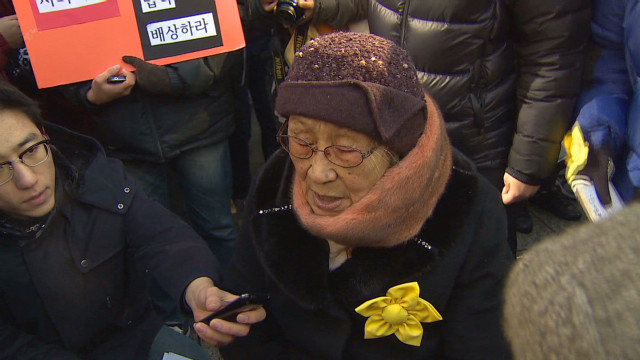
Last Sunday, Hwang Keum-ja, one of the few remaining Korean sex slaves of the Imperial Japanese Army (“comfort women”) passed away in a hospital in Seoul, South Korea. She died of lung and respiratory disease at the age of 89.

Forced into prostitution at the age of 16, Hwang was forced to serve in “comfort stations’ throughout World War II in several conquered countries. The life of these women can only be described as a living hell. On duty seven days a week, they were forced to have sex with as many IJA soldiers as showed up at the brothel. Hwang later said that she was unable to even stand up at the end of most weekends. She endured these torturous circumstances for several years before being abandoned in China at war’s end.

Making her way back to Korea, Hwang survived by collecting and selling garbage from the streets. Late in her life, she suffered hallucinations about being attacked in her home. She lived a life of great poverty, but this did not keep her from becoming one of the most outspoken advocates for the former sex slaves. Right up to the time of her death, Hwang regularly took part in demonstrations outside the Japanese embassy in Seoul demanding a formal apology from Japan and direct reparations to the individual women. There was precedent for their demands.

Early in the Pacific War, the U.S. government unconstitutionally imprisoned over 100,000 Americans of Japanese ancestry in internment camps. These citizens lost everything they had and had to endure concentration camp conditions for the remainder of the war. Nevertheless, thousands of the young men volunteered to serve in the U.S. armed forces. The army formed them into a segregated regimental combat team, the 442nd was the most decorated unit in the entire U.S. Army.

Later U.S. administrations recognized the horrible injustice visited on these Japanese-Americans. Congress passed a resolution of apology and appropriated funds to compensate the internees in part for their suffering. Today’s Americans are appalled that such a thing could have happened in our country. Over 200,000 Korean women were enslaved as IJA “comfort women.” Only 55 of these women are left alive. Hwang Keum-ja and her sisters are asking nothing more than what the U.S. provided to its internees.

My World War II novel, Hold Back the Sun, touches on the IJA sex slave system. A villainous Japanese officer plots to enslave the Dutch heroine as a “comfort woman” for causing him to lose face. He could not conceive of a more terrible fate. Neither could I as the author.

Note: Warren Bell is a historical fiction author with two novels released and for sale either for Kindle or in paperback from Amazon.com. Both are set during WWII, with Fall Eagle One taking place in Europe, and Hold Back the Sun is set in the war in the Pacific.