Warren Bell, Author

Showing posts with label genre. Show all posts

Tuesday, October 20, 2015

Venturing Into a Different Genre


http://amzn.to/1PEhP22
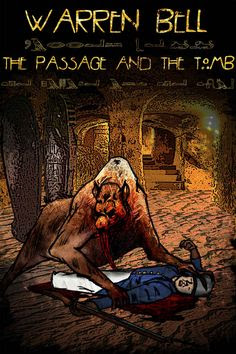
This past weekend, I published something very different from my other works. With Halloween approaching, I decided to write and publish a horror story. That may sound about as far from my usual military historical fiction as one can get. But perhaps not.

Why would I choose to write horror? I have been fascinated by the genre since I was a child. My mother loved horror films, and our whole family went to the movies together. Like Cosby’s Fat Albert and his buddies, I used to crouch behind the seats and peer between them to watch the scary scenes. I remember watching Lon Chaney Jr.’s face change from that of a man to that of a wolf through time-lapse photography. I recall the mummy’s ghost carrying Ramsay Ames into the swamp until they disappeared.  I saw David Carradine, in my opinion the best Dracula, turn to dust when caught by the sunlight. We also saw all the horror anthologies like Frankenstein Meets the Wolfman and Abbot and Costello Meet Frankenstein. A latecomer to the scene was The Creature From the Black Lagoon.

About the time I became a teenager, an amazing comic book series (actually short graphic novels) called Tales from the Crypt appeared on the market. The werewolves, vampires, and other monsters in these books were convincingly drawn, and the stories were spine tingling. Unfortunately (for fans of the series) someone convinced the publisher that he was contributing to juvenile delinquency, so he pulled the plug on the books. Some years later, the title was revived on a TV series.

My new story, The Passage and the Tomb: A Tale of Ancient Horror, takes place in Egypt in the early 1800s. My characters are soldiers and scientists from Napoleon’s invading army. Okay, so I can’t really suppress the historical novelist in me. Napoleon’s savants studied and documented the ancient Egyptian civilization for several years. They essentially invented Egyptology. What better foils to confront an ancient evil than the explorers who opened up the longest lasting civilization to the world?

Inadvertently, my characters free a 4,000-year-old werewolf who had been entombed alive by the ancients.  Will modern firearms protect them? Or is the power of the timeless monster too great to overcome? Read my story to find out.


Warren Bell is an author of historical fiction.  He spent 29 years as a US Naval Officer, and has traveled to most of the places in the world that he writes about.  A long-time World War II-buff, his first two novels, Fall Eagle One and Hold Back the Sun are set during World War II.  His third novel, Asphalt and Blood, follows the US Navy Seabees in Vietnam.  His most recent novel, Snowflakes in July, was released on Kindle on September 15, 2015, and a paperback version will be following.  For more about Warren Bell, visit his website at: wbellauthor.com or see him on twitter @wbellauthor.  

Sunday, February 9, 2014

The Nazi Looting of Europe’s Masterpieces

Release this week of the film, The Monuments Men, illuminates one of the darker aspects of the World War II in Europe—the systematic looting of art treasures from every country where the Nazis gained complete or partial control. I say systematic because there was nothing random about it. This crime against human culture was premeditated, meticulously planned, and carried out with utter ruthlessness.

The genesis of these crimes goes back to the character of the principal Nazi leaders. Adolf Hitler considered himself first and foremost an artist and a connoisseur of fine art. In his mad plans to make Germany the center of European government and culture, he conceived of a massive Führermuseum in his home city of Linz, Austria (then considered part of Greater Germany). Here would be stored and displayed all the major art treasures of the world. He began confiscating art objects from Germany’s Jewish citizens even before the beginning of the war.

Reichtsmarshall Hermann Goering, commander of the Luftwaffe and Hitler’s chosen successor, considered himself a Renaissance Man and coveted Europe’s fine art for his own enjoyment. Hitler put him in charge of the looting of Europe. Goering created the Reichsleiter Rosenberg Institute for the Occupied Territories (ERR) to carry out the looting. Leading Nazi Alfred Rosenberg was Goering’s deputy for this effort. Operational command went to Gerhard Utikal. The ERR became a massive, sprawling operation. Its units moved into Poland, Western Europe, and the Soviet Union close behind the conquering armies, seizing and cataloging every art treasure discovered. Heavy personal involvement in the looting by Goering assured that about half of the some 22,000 objects confiscated ended up in his private collection. Much went to other Nazi luminaries, such as Foreign Minister von Ribbentrop. Some of the looted treasures were put on display in Germany, but when the Allied bombing campaign became severe, most were secreted in bomb-proof storage, some in Berlin’s huge flak towers, others in underground salt mines.

Goering’s obsession on art theft directly affected the war with Russia. He was in Paris buying stolen art when the fateful 1942 decision to try to supply Stalingrad by air was taken. Because of his technical ignorance, Colonel General Hans Jeschonnek, assured Hitler that the Luftwaffe was up to the task. Goering knew better and was appalled to learn on the decision the following day. He was too afraid of Hitler to tell him the truth. 250,000 freezing, starving German soldiers died at Stalingrad.

After the invasion of Normandy and the breakout by George Patton’s 3rd Nazis began frantic efforts to get all the art remaining in France back to Germany. The French Resistance made superhuman efforts to keep these treasures in France. The 1964 movie, The Train, starring Burt Lancaster, first brought the art-looting problem to public awareness. It relates the efforts of French railway men to shuttle an entire trainload of French cultural wealth around France until captured intact by the Allies. The Monuments Men, the story of the Allies significant effort to rescue Europe’s cultural heritage, has the potential to educate a far wider audience of the sordid Nazi effort to lot the continent.

Note: Warren Bell is a historical fiction author with two novels released and for sale either for Kindle or in paperback from Amazon.com. Both are set during WWII, with Fall Eagle One taking place in Europe, and Hold Back the Sun is set in the war in the Pacific.

Friday, October 4, 2013

Tom Clancy: The Man Who Invented a Genre

 Tom Clancy signing books at the Burns Library, Boston College

I was planning to write this week’s blog post about my holiday here in Switzerland, but fate intervened. Just two days ago, those of us who write in the action/adventure genre lost a luminary who blazed the trail for those of us who are fascinated by military technology and love to share it with our readers. Tom Clancy was a pioneer who literally invented a new genre.

 In 1984, the venerable Naval Institute Press (NIP) published its first work of fiction, the product of a Maryland insurance salesman who liked to pal around with naval officers. Before being accepted by NIP, Tom Clancy had received rejections on The Hunt For Red October from a number of subsequently sorry publishing houses. Then something magic happened. Someone gave a copy of The Hunt For Red October to then-President Ronald Reagan. On his way to a helicopter to Camp David, the President was asked by a reporter what book he was carrying. The President told him the title and added, “It’s a really great thriller!” Sales of the book skyrocketed.

Tom Clancy’s debut novel was unique in that it included detailed descriptions of revolutionary Soviet submarine technology and the technical wonders employed by the U.S. Navy to locate the rogue Russian craft. It was the birth of a new genre, the “techno-thriller.” The book took the bestseller lists by storm. NIP continued the trend the following year with Stephen Coonts’s first novel, The Flight of the Intruder, a work crowded with cutting-edge aviation and weapons technology. Clancy soon returned with Red Storm Rising and Patriot Games. The Hunt For Red October and Patriot Games became blockbuster motion pictures. Tom Clancy was now a giant in the publishing industry.

Clancy was a pioneer who opened up many additional markets to the writing community. He branched out from his highly successful series of Jack Ryan thrillers to write non-fiction books on weapons systems and military units. Taking advantage of the technology explosion, he successfully entered the field of electronic war games. But the anchor of his empire remained the military-political-thriller arena. Jack Ryan rose through the CIA to eventually become Vice President and then President. Not happy with the policies of his successor, he returned to politics. Those of us who loved the series expected to be reading much more of Ryan’s story.

Tom Clancy was only sixty-six years old when he abruptly left us. This was much too young for the world to lose such an influential author. There had to be so many more adventure tales cooking in his fertile brain. But he leaves behind a whole school of adventure writers who employ the techniques he pioneered. He will be long remembered. Rest in peace, Father of Our Genre!

 Photo courtesy of: By Gary Wayne Gilbert (Flickr) [CC-BY-SA-2.0 (http://creativecommons.org/licenses/by-sa/2.0)], via Wikimedia Commons