Friday, March 21, 2014

Must We Be So Profane?

This past week, Jennifer Balink  (http://jennyslark.com ) published a blog post entitled, Sex, poop and periods, a plea for open and frank discussions between women and their daughters about issues of women’s health. She notes that, prior to about 1980, many such issues were considered “taboo,” including even mentioning the word, “breasts.” Ms. Balink applauds the falling away of such mental barriers and the relative openness of today’s speech in the Western democracies.

Having personally grown up in the last years of the so-called “Victorian morals” age, I must say that I have to agree with Ms. Balink. However, I am not so pleased with another facet of the openness of today—the coarsening of speech within our society and the casual use of profanity.  In my youth, there were certain words that one simply did not use in what was called “polite company.” Men were reluctant to offend women by speaking profanity in their presence. Conversely, women were not bashful about expressing their displeasure at men’s use of profanity within their hearing range. These words were always around, of course, but they were reserved for male only gatherings and usually spoken in soto voce. Nowadays, it seems to me that a large number of people just casually drop the S-bomb or the F-bomb as punctuation marks in their sentences.

The coarsening of our speech began in the 1960s. The political and social upheavals of that decade spurred on the change. I first noticed it while serving in the Vietnam War. The mixing of all levels of society brought about by the draft (often cited as one of the advantages of conscription) appeared to reduce the refinement of speech to the lowest common denominator. All conversation became laced with the foulest of profanity. With such a long war and the rotation of hundreds of thousands of troops through the war zone, this tendency soon spread to society at large. Hollywood led the way. How many movies of the 1970s dropped the F-bomb in strange contexts just for the shock effect? A lot! During this same period, the Women’s Movement promoted sexually equality to the fullest. This was a good thing, but unfortunately, too many interpreted equality as the freedom for women to be just as profane as men. Many women gave up their traditional role as the keeper of “polite society.” In fact, with children hearing both parents use casual profanity in everyday speech, we may have now produced whole generations that no longer even have a concept of “polite society.”

I’m not pretending that my generation didn’t have its own speech faults. I grew up in the Deep South during World War 2. The casual use of the N-bomb among white society at the time still pains me. I haven’t used that word as an adult. My children and grandchildren have never heard it from my mouth. The fact that it is still in use anywhere today is heartbreaking to me. But so is the use of the F-bomb as a punctuation mark.

I came face to face with this problem when I began my current writing project, Asphalt and Blood: Navy Seabees in the Battle for Hue City. I have always striven for historical accuracy in all my novels. When writing dialog between Seabees in Vietnam, I started by using the exact language that I heard while serving there. I wasn’t very far into the book before I realized that the excess profanity broke up the chain of thought I was trying to convey. After discussing the problem with some of my Seabee veteran friends, I decided to take out most of the gratuitous profanity. In my Author’s Forward, I explain my reasoning for this and instruct my readers who insist of speech authenticity to simply insert their favorite expletive whenever there is a punctuation mark.

Perhaps I am just an old “mossback” from a passing generation. I certainly wouldn’t want to go back to the restrictive society of the 1950s. But can’t we at least show respect for each other by cleaning up our speech?

Note: Warren Bell is a historical fiction author with two novels for sale either for Kindle or in paperback from Amazon.com. Both are set during WWII, with Fall Eagle One taking place in Europe, and Hold Back the Sun set in the war in the Pacific.  

Friday, March 14, 2014

Recalling Another Lost Airliner

Today’s headlines and TV news are filled with speculation about what has happened to Malaysian Airlines Flight MH370. The Boeing 777 vanished from radar last Saturday. Each day brings new evidence and new theories of the fate of the plane and the 239 souls aboard. A map in this morning’s Washington Post shows the entire Far East with circles drawn showing how far the plane could have flown on the fuel aboard. While reading the accompanying article, I was struck by how eerily similar the MH 370 mystery is to one I uncovered while doing research for my latest novel, Hold Back the Sun.


Hold Back the Sun begins with a Pan American Clipper flying boat flight across the Pacific from San Francisco to Manila in the Philippines. When this service was begun in the 1930s, the Pacific was a vast stretch of open water with few aids to navigation, as we understand them today. Fuel capacity limited the flights to daylight island-hopping. Nights were spent in posh hotels ashore. The four-engine aircraft rode radio beacons from island to island.  The price of a passenger ticket was the equivalent of about $5,000 in today’s currency.  Only airmail contracts with the U.S. government made the flights profitable. For businessmen, cutting the trans-Pacific travel time from 30 days on a ship to five days flying made the flights attractive.


The last stop before Manila was on the U.S. controlled island of Guam. About 136 miles to the north, the Japanese-owned island of Saipan was home to a major base of the Imperial Japanese Navy (IJN).


At about 12:15 p.m. Manila time on July 29, 1938, The Pan Am flying boat, Hawaii Clipper, reported its noon position by radio to airline stations in Guam and the Philippines. At that time, the plane was about 582 nautical miles east-southeast of Manila and on schedule for arrival in the Philippines. No contact with the aircraft ever occurred after that transmission. The Martin 130 aircraft and its passengers and crew simply vanished. A widespread air and surface search of the projected course found no wreckage, but an oil slick was encountered. Samples of the oil were taken and tested, but proved not to be oil from the aircraft.  With war raging in China and about to begin in Europe, the fate of Hawaii Clipper and the people aboard soon faded from the news. It remained a total mystery until the end of the Pacific War.


In the late 1940s, rumors began to circulate among the relatives of the people lost on Hawaii Clipper. One story attributed to a U.S. Navy admiral was that the plane had been found in Japanese colors at Yokosuka Naval Base by occupying forces.  Another rumor suggested that IJN naval intelligence officers has alleged that they had hijacked Hawaii Clipper west of Guam and flown it to their new seaplane base on the island of Truk.  The purported motives behind this theft were to stop over three million American dollars aboard the flight from being delivered to the Chinese government by a prominent Chinese-American businessman.  Stealing the details of the latest Pratt and Whitney engines that powered the clipper was another possible reason.


The similarities of Hawaii Clipper’s loss to that of Amelia Earhart barely a year before soon spawned a number of theories and enthusiasts.  In 2000, after many years of research, Charles N. Hill published a book entitled, FIX ON THE RISING SUN: The Clipper Hijacking of 1938 –and the Ultimate M.I.A’s. Mr. Hill’s thesis was that two Saipan IJN officers hid in the plane’s baggage compartment, emerged soon after liftoff from Guam, and commandeered control of the flight. He believes that they then diverted the plane to Truk. While enroute, the Japanese officers supposedly forced the Pan Am navigator, George M. Davis, to file false position reports to make Pan Am believe that the plane remained on its planned course. Mr. Hill presents a fairly convincing case that the false position reports contained clues to point investigators to the actual destination—Truk Lagoon. Mr. Hill also documented conversations with native people on Truk in which they told of helping to bury a number of Caucasians in the foundations of an IJN hospital being built at the time.  He was unable to get government permission to dig under the foundations to test the veracity of the stories.


Mr. Hill died without ever getting to prove or disprove his theories.  Guy Noffsinger, a former U.S. Navy intelligence officer, has taken up the quest for the missing clipper. He has a website on the subject at http://lostclipper.com. Mr. Noffinger has also traveled to Truk and believes that he has identified the slab beneath which the crew and passengers of Hawaii Clipper are allegedly buried. He plans to return to Truk this year and is optimistic that he will be able to examine the site with ground penetrating sonar and perhaps excavate. I hope that Mr. Noffsinger is successful. Bringing closure to the descendants and relatives of the nine crew members and six passengers lost with the plane would be well worth the effort.

Note: Warren Bell is a historical fiction author with two novels for sale either for Kindle or in paperback from Amazon.com. Both are set during WWII, with Fall Eagle One taking place in Europe, and Hold Back the Sun set in the war in the Pacific.  

Saturday, March 8, 2014

Sharpening My Perspective on the Vietnam War

During the past few weeks, I have been plugging away on my new novel, Asphalt and Blood: U.S. Navy Seabees in the Battle for Hue City.  Although I’m depending heavily on my notes I took while I was there in the 1960s and interviews with other Seabee veterans, I also remain alert for new material from other sources. I recently found some excellent material on a media I’ve told my readers before not to trust: my television set.

While casting about for anything worthwhile in a barren wasteland last Monday evening, I stumbled onto a pair of Vietnam War shows on the Military Channel.  The American Heroes Channel, a group previously unknown to me, produced both programs. The first revealed newly discovered combat film taken during the Battle of Dak To. The horrors of jungle combat with the superbly equipped, highly professional North Vietnamese Army (NVA) were presented in all their raw detail.  Soldiers were seen being shot and blown apart with mortar bombs exactly as it happened. This was not reenactment. It was taken live during the battle. Combat cameramen went right in with the infantry as they penetrated triple canopy jungle to assault hilltop positions. The program drove home to me that Vietnam was not a homogenized war. It was a number of different wars being fought simultaneously, details depending on terrain and environment. Our troops had widely varying experiences according to where they fought.  When writing about Vietnam, an author must be sure to describe the right war for the geographical setting.

The second show I watched was called Against the Odds and covered the first half of the Battle for Hue City in 1968. I decided to watch the program to refresh my memories of Hue and its surroundings. I was soon struck by how accurate the producers got this one. For the first time I have seen on American television, the Hue battle was portrayed for what it was, a victorious fight against impossible odds by a few half-strength companies of U.S. Marines. During the Tet holiday celebrations, the NVA slipped nine regiments of highly trained troops inside Hue, seizing three fourths of the city overnight. The Marines at Camp Eagle in nearby Phu Bai had no concept of the enemy’s strength. Responding to calls for help from the besieged Military Assistance Command (MACV) compound in South Hue, a force of less that a company of Marines was originally dispatched. This group was heavily engaged by the NVA soon after entering Hue. Calls for reinforcements brought a few more small companies, and the Marines finally reached MACV.

As the overwhelming strength of the NVA became apparent through “reconnaissance in force,“ more individual Marine companies were fed into the battle. They still were unaware that the odds were about 100 to one against them. And this was not the sort of war for which they had been trained. In 1968, Counter-insurgency was the style of fighting American troops expected.  A few Marine captains soon realized that they now had to fight a battle more akin to that in Stalingrad in World War II, street-to-street, house-to-house, room-by-room. Amazingly, the young Marines quickly adapted and began to win these battles in microcosm. They were Americans and had been brought up to think for themselves. They were Marines, a band-of-brothers fiercely loyal to each other and to the Corps. And as one Hue veteran so aptly stated, “There is no fighting machine in the world as destructive as a pissed-off nineteen-year-old Marine.” And so they persevered, although many of them were walking wounded. One wounded captain continued fighting until he collapsed. His men brought him a wounded chaplain, who administered last rites. The captain’s dying words were, “God, please take care of my Marines.” Amazingly, these few hundred kids finishing clearing South Hue to the Perfume River, then boarded landing craft to cross to the north bank. 

Against the Odds closes at this point. The battle for the Hue Citadel was an equally amazing story. These were Nineteenth Century French-designed fortifications of stone blocks and brick enclosing tightly packed residential areas, the former emperor’s compound, and shrines. One paramount fact that the TV program omitted was that the Army of the Republic of Vietnam (ARVN) 1st Division held onto their fortress in the northern corner of the city.  Again, a few companies of Marines entered the walls through the 1st Division compound and fought another house-to-house battle to evict literally regiments of NVA. It was said of the Marines in the Battle of Iwo Jima that, “Uncommon valor was a common virtue.” No less was true of the young Marines at Hue City. One of the tragedies of the Vietnam War was that their accomplishments were not properly recognized at the time. In fact, a large segment of the media ridiculed the battle, arguing that the time it took to retake Hue revealed American ineffectiveness. Such slanted reporting caused many of us that were then “in-country” to lose trust in the veracity of the media.

The Battle for Hue City is central to Asphalt and Blood. My story relates how U.S. Navy Seabees worked alongside the Marines, sharing their familiarity with the city, bridging canals and providing other essential construction support. I hope veterans consider my novel to be as accurate as I found Against the Odds.

Photo Caption: Flagtower Citadel of Huế with NVA flag flying.

Photo Credit: By Arabsalam (Own work) [GFDL (http://www.gnu.org/copyleft/fdl.html) or CC-BY-SA-3.0-2.5-2.0-1.0 (http://creativecommons.org/licenses/by-sa/3.0)], via Wikimedia Commons

Note: Warren Bell is a historical fiction author with two novels released and for sale either for Kindle or in paperback from Amazon.com. Both are set during WWII, with Fall Eagle One taking place in Europe, and Hold Back the Sun set in the war in the Pacific. 


Saturday, March 1, 2014

Women in Early 1940s Japan


Earlier this month, The Japan Times reported that several thousand women in Tokyo had threatened to boycott sex with their husbands if they voted for Yoichi Masuzoe, one of the mayoral candidates in the upcoming election. Masuzoe had made comments at a press conference to the effect that women were unfit to make government decisions because their judgment was that erratic during their monthly period. After Masuzoe won, the same group is calling for all women to boycott sex with any man who voted for him.  Such a movement would have been unthinkable during the early 1940s, the setting for parts of my latest novel, Hold Back the Sun.

In pre-Pacific War Japan, women were decidedly second-class citizens. This had been true since the beginnings of the Samurai Period. The greatest value of women, especially in middle and upper class society, was as child bearers and sex objects to be enjoyed by men. The Japanese viewed sex drive, especially in men, as just another appetite that needed to be consistently satisfied. Among the peasant farmers, of course, women were also valued for their labor in cultivating crops.  When the push towards modernization began in the late 1800s, women were also viewed as a source of industrial labor, at least until they were married.

Women had few freedoms. They were always under the domination of a male. Before marriage, they had to obey their fathers. After marriage, their husbands assumed command. Widows were expected to follow the orders of their oldest son. Nowhere were the words of the old folksong sung by Joan Baez, The Wagoner’s Lad, truer than in Japan:

Oh heartache’s the portion of all womankind,
She’s always controlled; she’s always confined,
Controlled by her parents until she’s a wife,
A slave to her husband the rest of her life

In the home, the wife was the husband’s servant. When he returned from work, she took his coat and made him comfortable, holding his chair while he sat if they used western furniture. She prepared and served the food and was responsible for child care. If her husband was an eldest son, she was required to become his widowed mother’s servant also. If the husband desired sex, she could not refuse him. But the primary job of a wife was not sexual entertainment. It was bearing children to carry on the family. For pure sexual enjoyment, Japanese men frequented geishas and yûjos (courtesans).  Japan’s sex trade was extensive and sophisticated. The pinnacle of the trade was the famous Yoshiwara sex market in Tokyo. Girls as young as twelve were literally sold into this trade by their families. They became sex slaves. Of course, peasant farmers could ill afford to live by this standard. They were more likely to depend on their wives for sexual pleasure.

Some readers of Hold Back the Sun have suggested that I was too harsh on the Japanese arch-villain. But considering the culture in which he was brought up, is it any wonder that he viewed women primarily as sex objects? Or that he considered them incapable of complex thinking. As one of the militarist ultra-nationalists, he would have harbored hatred for European colonialists for the subjugation of Asians. Such a man would have been ashamed and enraged to lose a bridge tournament to a “mere woman,” and a white one at that. He would view revenge in the form of sexual slavery as a matter of simple justice.

The position of women improved a great deal after General Douglas MacArthur and his staff wrote political sexual equality for women into the new Japanese constitution. Women today are much more independent. A large percentage of educated young women have discovered that they don’t need a man to support them. Almost forty percent of these women are refusing to marry and assume the role of servants. A poll showed that about 30 percent of all Japanese between 18 and 30 years old have never had even one date.  Yet the attitudes of some politicians like Yoichi Masuzoe indicate that men still have a way to go in their attitudes. It will be interesting to learn how the boycott turns out.


Much of the information in this post was drawn from Cities of Sin, a 1930s publication of the League of Nations Commission on White Slavery.

Note: Warren Bell is a historical fiction author with two novels released and for sale either for Kindle or in paperback from Amazon.com. Both are set during WWII, with Fall Eagle One taking place in Europe, and Hold Back the Sun is set in the war in the Pacific. 


Sunday, February 9, 2014

The Nazi Looting of Europe’s Masterpieces

Release this week of the film, The Monuments Men, illuminates one of the darker aspects of the World War II in Europe—the systematic looting of art treasures from every country where the Nazis gained complete or partial control. I say systematic because there was nothing random about it. This crime against human culture was premeditated, meticulously planned, and carried out with utter ruthlessness.

The genesis of these crimes goes back to the character of the principal Nazi leaders. Adolf Hitler considered himself first and foremost an artist and a connoisseur of fine art. In his mad plans to make Germany the center of European government and culture, he conceived of a massive Führermuseum in his home city of Linz, Austria (then considered part of Greater Germany). Here would be stored and displayed all the major art treasures of the world. He began confiscating art objects from Germany’s Jewish citizens even before the beginning of the war.

Reichtsmarshall Hermann Goering, commander of the Luftwaffe and Hitler’s chosen successor, considered himself a Renaissance Man and coveted Europe’s fine art for his own enjoyment. Hitler put him in charge of the looting of Europe. Goering created the Reichsleiter Rosenberg Institute for the Occupied Territories (ERR) to carry out the looting. Leading Nazi Alfred Rosenberg was Goering’s deputy for this effort. Operational command went to Gerhard Utikal. The ERR became a massive, sprawling operation. Its units moved into Poland, Western Europe, and the Soviet Union close behind the conquering armies, seizing and cataloging every art treasure discovered. Heavy personal involvement in the looting by Goering assured that about half of the some 22,000 objects confiscated ended up in his private collection. Much went to other Nazi luminaries, such as Foreign Minister von Ribbentrop. Some of the looted treasures were put on display in Germany, but when the Allied bombing campaign became severe, most were secreted in bomb-proof storage, some in Berlin’s huge flak towers, others in underground salt mines.

Goering’s obsession on art theft directly affected the war with Russia. He was in Paris buying stolen art when the fateful 1942 decision to try to supply Stalingrad by air was taken. Because of his technical ignorance, Colonel General Hans Jeschonnek, assured Hitler that the Luftwaffe was up to the task. Goering knew better and was appalled to learn on the decision the following day. He was too afraid of Hitler to tell him the truth. 250,000 freezing, starving German soldiers died at Stalingrad.

After the invasion of Normandy and the breakout by George Patton’s 3rd Nazis began frantic efforts to get all the art remaining in France back to Germany. The French Resistance made superhuman efforts to keep these treasures in France. The 1964 movie, The Train, starring Burt Lancaster, first brought the art-looting problem to public awareness. It relates the efforts of French railway men to shuttle an entire trainload of French cultural wealth around France until captured intact by the Allies. The Monuments Men, the story of the Allies significant effort to rescue Europe’s cultural heritage, has the potential to educate a far wider audience of the sordid Nazi effort to lot the continent.

Note: Warren Bell is a historical fiction author with two novels released and for sale either for Kindle or in paperback from Amazon.com. Both are set during WWII, with Fall Eagle One taking place in Europe, and Hold Back the Sun is set in the war in the Pacific.

Sunday, February 2, 2014

Another Voice of Anguish Stilled


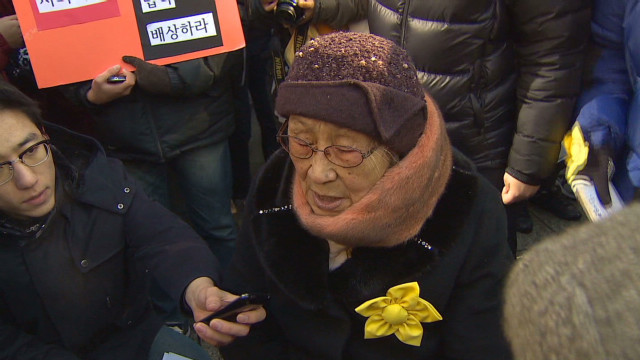
Last Sunday, Hwang Keum-ja, one of the few remaining Korean sex slaves of the Imperial Japanese Army (“comfort women”) passed away in a hospital in Seoul, South Korea. She died of lung and respiratory disease at the age of 89.

Forced into prostitution at the age of 16, Hwang was forced to serve in “comfort stations’ throughout World War II in several conquered countries. The life of these women can only be described as a living hell. On duty seven days a week, they were forced to have sex with as many IJA soldiers as showed up at the brothel. Hwang later said that she was unable to even stand up at the end of most weekends. She endured these torturous circumstances for several years before being abandoned in China at war’s end.

Making her way back to Korea, Hwang survived by collecting and selling garbage from the streets. Late in her life, she suffered hallucinations about being attacked in her home. She lived a life of great poverty, but this did not keep her from becoming one of the most outspoken advocates for the former sex slaves. Right up to the time of her death, Hwang regularly took part in demonstrations outside the Japanese embassy in Seoul demanding a formal apology from Japan and direct reparations to the individual women. There was precedent for their demands.

Early in the Pacific War, the U.S. government unconstitutionally imprisoned over 100,000 Americans of Japanese ancestry in internment camps. These citizens lost everything they had and had to endure concentration camp conditions for the remainder of the war. Nevertheless, thousands of the young men volunteered to serve in the U.S. armed forces. The army formed them into a segregated regimental combat team, the 442nd was the most decorated unit in the entire U.S. Army.

Later U.S. administrations recognized the horrible injustice visited on these Japanese-Americans. Congress passed a resolution of apology and appropriated funds to compensate the internees in part for their suffering. Today’s Americans are appalled that such a thing could have happened in our country. Over 200,000 Korean women were enslaved as IJA “comfort women.” Only 55 of these women are left alive. Hwang Keum-ja and her sisters are asking nothing more than what the U.S. provided to its internees.

My World War II novel, Hold Back the Sun, touches on the IJA sex slave system. A villainous Japanese officer plots to enslave the Dutch heroine as a “comfort woman” for causing him to lose face. He could not conceive of a more terrible fate. Neither could I as the author.

Note: Warren Bell is a historical fiction author with two novels released and for sale either for Kindle or in paperback from Amazon.com. Both are set during WWII, with Fall Eagle One taking place in Europe, and Hold Back the Sun is set in the war in the Pacific.

Saturday, January 25, 2014

The Pacific War was About Oil


In the latter part of his life, U.S. Navy Admiral Hyman Rickover predicted that the next wars the United States fought would be over access to oil. His conclusions proved remarkably accurate. The last ten years have seen the U.S. involved in conflicts in the Middle East, source of some of the world’s largest oil reserves.


For several decades, the U.S. has been a net oil importer. As local reserves diminished, it proved too easy to just replace them with foreign purchases. The point that modern industrial society cannot support itself without reliable sources of energy seemed to be forgotten. Then the Arab Oil Embargo of the 1970s shattered our illusions. The United States had become an an oil “have-not.”


Japan faced an energy crisis in 1941 that led directly to their attack on western colonies in the Far East. Since the opening of Japan to world trade by Admiral Perry in the mid-Nineteenth Century, the country had been striving to become a modern industrialized nation. From an archaic feudal society, the country made a great leap forward into the modern world. Desiring all the trappings of a major power, Japan turned to Germany to build her army and to Great Britain to construct an up-to-date navy. Consultants from all over the world helped develop their heavy industry.


Japan lacked one key ingredient to fulfill their aspirations—a local supply natural resources. Like many nations, they were forced to purchase them abroad. The U.S. was a major player in this trade, becoming Japan’s major source of oil and the scrap iron required to produce steel. While fostering world trade, these imports created a balance of payments problem for the Japanese. They successfully negotiated this situation until the 1920s.


The Great Depression hit Japan particularly hard. The hardships being endured prompted many ultra nationalists in the armed forces to advocate seizing the needed resources from their neighbors. Everything they needed waited just over the horizon. As more and more recruits joined their ranks, these aggressive thoughts were translated into action. The semi-autonomous Kwantung Army in Korea invaded and occupied Manchuria with its rich mineral deposits. When the League of Nations protested, Japan walked out.  Then, in 1937, Japan invaded China itself,

beginning a protracted conflict.


Long committed to its “Open Door” policy concerning China, the U.S. protested. Inspired by Pearl S. Buck’s novels and Hollywood movies, many Americans held romanticized views of China. The Japanese, however, persisted in their conquests. Sentiment built in the Roosevelt administration to impose sanctions on Japan.


When Japan occupied French Indochina (now Vietnam) in 1941, Washington finally acted, freezing Japanese assets in the U.S. This had the immediate effect of shutting off exports to Japan.  The U.S. oil tap was suddenly turned off. The finite reserves of petroleum products within Japan became a wasting asset.  Japan’s civilian government began negotiations with the U.S., attempting to find an acceptable resolution to the crisis. The ultra nationalists in the Army began pushing for a military solution.


One faction advocated invading Siberia. Hitler’s armies were, after all, at the gates of Moscow. The navy argued for a quick strike to the south. The lightly defended Dutch East Indies (Indonesia today) possessed a mammoth oil industry exploiting huge underground reserves.  The oilfields on Tarakan Island yielded crude so pure that it could be burned in boilers without refining. The Royal Dutch Shell refinery at Balikpapan in Borneo was the world’s third largest, producing sufficient product to satisfy the navy’s entire needs.


Two major obstacles fell in the way of the southern plan: The British forces stationed at Fortress Singapore and the U.S. forces in the Philippine Islands. Britain was stretched to the limit in her war with Germany, but the U.S. was not yet a belligerent. Roosevelt had moved the U.S. Pacific Fleet to Pearl Harbor, where it could respond quicker to trouble in the Philippines.


The brilliant General Tomoyuki Yamashita devised a workable plan to capture Singapore from inland. Navy Admiral Yamamoto’s staff conceived the idea of destroying the U.S. Pacific Fleet in port at the outset of hostilities, delaying America’s intervention. Then Washington further shocked Tokyo with a demand that Japan withdraw from China before sanctions would be lifted. The civilian government in Tokyo collapsed, and General Tojo became Prime Minister. Faced with the humiliation of withdrawal or exhaustion of fuel supplies, Tojo argued for war. With the Emperor’s approval, the date for hostilities to commence was set.


For the first six months, Japan ran wild in the Far East, seizing all the territories in their ambitions. Ironically, the Dutch Oil executives adopted a “scorched earth” policy. Nothing was to be left to the invaders. They plugged oil wells, blew up pipelines and set fire to their precious refineries. When the Japanese invaded Balikpapan, they found only burnt, twisted wreckage at the oil facilities. The enraged Japanese commander ordered the massacre of the entire Caucasian population. Some were beheaded. Most were machine gunned in the surf. A similar massacre of Dutch males occurred in Tjepu, Java.


Japan soon had the oilfields back in operation and new refineries constructed. Oil was not a problem again until U.S. submarines sank a large percentage of their tankers later in the war.


The philosopher, George Santayana, observed that nations that do not study history are doomed to repeat it. After three wars to assure oil supplies, the U.S. should develop its newly discovered oil reserves and strive for energy independence.

Note: Warren Bell is a historical fiction author with two novels released and for sale either for Kindle or in paperback from Amazon.com.  Both are set during WWII, with Fall Eagle One taking place in Europe, and Hold Back the Sun is set in the war in the Pacific.