Showing posts with label blogging. Show all posts

Thursday, May 1, 2014

Last Minute Books


Welcome to 'Last Minute Books' - a blog tour featuring a number of authors who would like to check that you've thought of absolutely everything for your holidays. Suitcase packed? Shoes, sandals, trainers, jeans, shorts, dresses, trousers, blouses, shirts......... sunglasses.... suntan lotion....  best smile? And, of course, forgive us do..... But your holiday reads too? Don't forget your reading device. You might prefer printed books but don't forget to pack that kindle or kobo - if that's what you prefer.


Sit back, rest, relax, enjoy the sunshine and let your mind slip away. It's holiday time. 


Let's see what questions the tour master has for our favourite authors and we'll try and find some book recommendations for you. Indeed, all our author friends have the same questions - But are their books the same? Let's see what Warren Bell has to say about holidays.


Q. Where would you recommend for a holiday, Warren?


A. Of all the holidays I’ve enjoyed, I think that the ten-day tour of Provence that my wife and I took in Southern France was my favorite. The people were warm and friendly. Highlights included everything from Roman amphitheaters built B.C. to museums housing the works of Picasso and Van Gogh.  We climbed mountains with medieval fortresses, toured five-story castles, viewed sweeping fields of Lavender, and toured vineyards and wineries. My favorite thing about Provence was the wonderful food and Rose wine. Every meal became a culinary delight. Happy waiters kept replenishing the fabulous baguettes and wine as long as we sat at the table. Unfortunately, I brought home several more pounds around my waist than I had on the trip over.


Q. What kind of a holiday do you particularly enjoy?


A.  My wife and I like to take organized tours where a skilled planner does all the work of organizing the sites, food, etc., leaving us to just enjoy our time. We especially like tours in Europe. We have been to London, Scotland, Bavaria, Switzerland, and of course Provence.  Trips with a central base hotel with day trips around the country are our favorites.


Q. If you could pack someone special in your suitcase, who would it be and why?


A. I think Franklin Delano Roosevelt.  I believe that he was one of the most indispensable men of the Twentieth Century, and I have many questions I would like to ask him. He also knew how to have a really good time.


Q. How do you relax on holiday, or you one for rushing around seeing the sights?


A. I certainly enjoy seeing the sights. Being an amateur historian, there are many places in the world I want to view first-hand. I also love to relax over a superb meal with fine wines. In my experience, nowhere are these better than in Provence.  


Q. What books would you recommend for this years holiday and why?

  1.  I would recommend anything by either Bernard Cornwell or Wilbur Smith. Of course, I would be pleased if some chose one of my novels, Fall Eagle One and Hold Back the Sun. Details and ordering information are included on my webpage. For myself, I’m currently reading Zoe Saadia’s excellent series on the Rise of the Aztecs in Mesoamerica. I’ll probably take along a couple on my laptop.


Thanks for taking part in this chat. Have a great holiday everyone. Now don't forget your last minute books. But why don't you take a short trip with me through cyber space and visit the following AUTHORS ON TOUR to see what they recommend for a good holiday read.


Friday, April 18, 2014

The Agony of Rewriting


When I was at the 2000 Maui Writer’s Conference, I attended several classes conducted by successful literary agents on the writing and publishing process.  One theme kept recurring in all the talks: “If your manuscript is accepted by an agent, expect to have to rewrite it several times before submission to publishers.”  Many in the classes were alarmed at this revelation. Having studied James Michener’s Advice to Beginning Authors, I was not one of them. Michener did not consider himself a good writer, but he felt that he was an excellent rewriter.  He considered the secret to his runaway success to be his ability to pare and prune his drafts of extraneous material.

I was fortunate to come away from the conference with acceptance of my manuscript of Fall Eagle One by a very reputable literary agency. I quickly discovered that the instructors at Maui were right on target. Following initial discussions with the agent assigned to me, He recommended that I work with a private editor to rewrite my manuscript. The editor he recommended, Ed Stackler of Stackler Editorial Agency (stackler@aol.com), first read my manuscript and gave it a thorough critique.  Ed is an excellent editor. He pointed out many weaknesses, including some main characters, that needed correcting, not the least of which was my tendency to over-explain just about everything. 
=
I am a product of my education. My first two degrees were in civil engineering. All engineers have a passion to understand how things work.  Many also are natural teachers who hunger to explain what they know to those around them.  For example, after I thoroughly researched the German system of defenses against the Royal Air Force’s nightly bombings, I thought my readers would like to know the exact details. Many of my carefully crafted descriptions bore Ed’s notation, “Excessive exposition-does not move the story forward.” That last phrase became a mantra for my editing and rewriting: “If it doesn’t move the story forward, cut or severely compress it.”

Such rewriting is easier said than done, and it can be painful. I think all authors view their work as parents view their children.  Discarding hours of hard research and writing takes great self-discipline. It hurt, for instance, to discard my careful description of Berlin’s massive flak tower/air raid shelters.  But after careful consideration, I had to agree with Ed’s comments. I cut one page to two sentences.  This process includes a careful balancing act. As I wrote in a previous blog post, the reader needs to be able to mentally visualize the story.  Or as the British say, “Put in the picture.” Sensory notations—how the scene looks, smells, tastes, etc.—are  necessary elements.  One needs the readers to feel that, “They are there.”  But always in the background must loom that question, "Does it move the story forward?”

Even more painful can be modifying or eliminating characters. After two or three rewrites, Ed kept questioning one of my major characters—Hermann Goering’s technical adjutant, who devises the scheme upon which the plot rests.  Ed felt he was “a cold fish,” and that he needed major change.  I was surprised by his proposal. I had based the character on an actual Luftwaffe officer who served on Goering’s staff.  But by then, I had come to completely trust Ed’s judgment.  I went back to basic research and soon discovered another actual person upon whom to base my character.  Thus was born perhaps the best character in Fall Eagle One: Major Siegfried von Rall, a swashbuckling frontline bomber commander rated as, “the best pilot in the Luftwaffe.”  Along with Siegfried came my strongest female characters: his mother, a Prussian countess, and his love interest, a woman physician.  Following this last rewrite, both Ed and my agent pronounced the novel ready to shop to publishers. 

Unfortunately, all our work fell on deaf ears at that time.  We were shopping the book in early months of 2002.  We soon learned that publishers were not ready to print a book about aircraft attacking the continental U.S. that soon after the terrorist attacks of 9/11/2001. Fall Eagle One had to be set aside for a more propitious time.

The story has a happy ending.  The Amazon Kindle version of Fall Eagle One went live in November 2011, and the paperback version on Amazon.com followed the next January.  The book was chosen as a Semifinalist in the Kindle Book Review Best Indie Books of 2012. It sold in the upper 1-2 percent of Kindle sales throughout 2013, and sales remain strong.  The book currently has 61 customer reviews on Amazon.com with an average rating of 4.5 out of 5 Stars. Thirty-seven of the reviews are 5-Star. The latest calls it, “One of the best WW2 books ever.” Hard work does pay off.  
Note: Warren Bell is a historical fiction author with two novels for sale either for Kindle or in paperback from Amazon.com. Both are set during WWII, with Fall Eagle One taking place in Europe, and Hold Back the Sun set in the war in the Pacific.   

Photo: Lord van Tasm at German Wikipedia [GFDL (http://www.gnu.org/copyleft/fdl.html), CC-BY-SA-3.0 (http://creativecommons.org/licenses/by-sa/3.0) or CC-BY-SA-3.0-de (http://creativecommons.org/licenses/by-sa/3.0/de/deed.en)], via Wikimedia Commons

Sunday, February 9, 2014

The Nazi Looting of Europe’s Masterpieces

Release this week of the film, The Monuments Men, illuminates one of the darker aspects of the World War II in Europe—the systematic looting of art treasures from every country where the Nazis gained complete or partial control. I say systematic because there was nothing random about it. This crime against human culture was premeditated, meticulously planned, and carried out with utter ruthlessness.

The genesis of these crimes goes back to the character of the principal Nazi leaders. Adolf Hitler considered himself first and foremost an artist and a connoisseur of fine art. In his mad plans to make Germany the center of European government and culture, he conceived of a massive Führermuseum in his home city of Linz, Austria (then considered part of Greater Germany). Here would be stored and displayed all the major art treasures of the world. He began confiscating art objects from Germany’s Jewish citizens even before the beginning of the war.

Reichtsmarshall Hermann Goering, commander of the Luftwaffe and Hitler’s chosen successor, considered himself a Renaissance Man and coveted Europe’s fine art for his own enjoyment. Hitler put him in charge of the looting of Europe. Goering created the Reichsleiter Rosenberg Institute for the Occupied Territories (ERR) to carry out the looting. Leading Nazi Alfred Rosenberg was Goering’s deputy for this effort. Operational command went to Gerhard Utikal. The ERR became a massive, sprawling operation. Its units moved into Poland, Western Europe, and the Soviet Union close behind the conquering armies, seizing and cataloging every art treasure discovered. Heavy personal involvement in the looting by Goering assured that about half of the some 22,000 objects confiscated ended up in his private collection. Much went to other Nazi luminaries, such as Foreign Minister von Ribbentrop. Some of the looted treasures were put on display in Germany, but when the Allied bombing campaign became severe, most were secreted in bomb-proof storage, some in Berlin’s huge flak towers, others in underground salt mines.

Goering’s obsession on art theft directly affected the war with Russia. He was in Paris buying stolen art when the fateful 1942 decision to try to supply Stalingrad by air was taken. Because of his technical ignorance, Colonel General Hans Jeschonnek, assured Hitler that the Luftwaffe was up to the task. Goering knew better and was appalled to learn on the decision the following day. He was too afraid of Hitler to tell him the truth. 250,000 freezing, starving German soldiers died at Stalingrad.

After the invasion of Normandy and the breakout by George Patton’s 3rd Nazis began frantic efforts to get all the art remaining in France back to Germany. The French Resistance made superhuman efforts to keep these treasures in France. The 1964 movie, The Train, starring Burt Lancaster, first brought the art-looting problem to public awareness. It relates the efforts of French railway men to shuttle an entire trainload of French cultural wealth around France until captured intact by the Allies. The Monuments Men, the story of the Allies significant effort to rescue Europe’s cultural heritage, has the potential to educate a far wider audience of the sordid Nazi effort to lot the continent.

Note: Warren Bell is a historical fiction author with two novels released and for sale either for Kindle or in paperback from Amazon.com. Both are set during WWII, with Fall Eagle One taking place in Europe, and Hold Back the Sun is set in the war in the Pacific.

Sunday, February 2, 2014

Another Voice of Anguish Stilled


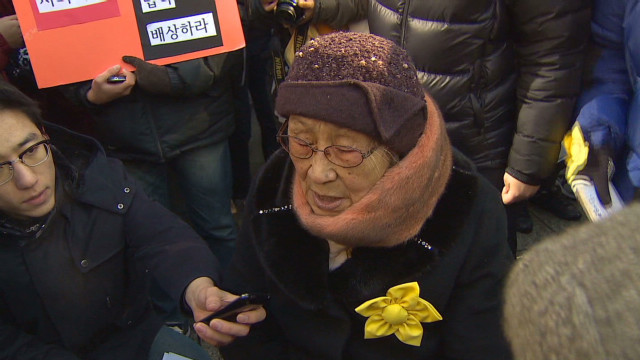
Last Sunday, Hwang Keum-ja, one of the few remaining Korean sex slaves of the Imperial Japanese Army (“comfort women”) passed away in a hospital in Seoul, South Korea. She died of lung and respiratory disease at the age of 89.

Forced into prostitution at the age of 16, Hwang was forced to serve in “comfort stations’ throughout World War II in several conquered countries. The life of these women can only be described as a living hell. On duty seven days a week, they were forced to have sex with as many IJA soldiers as showed up at the brothel. Hwang later said that she was unable to even stand up at the end of most weekends. She endured these torturous circumstances for several years before being abandoned in China at war’s end.

Making her way back to Korea, Hwang survived by collecting and selling garbage from the streets. Late in her life, she suffered hallucinations about being attacked in her home. She lived a life of great poverty, but this did not keep her from becoming one of the most outspoken advocates for the former sex slaves. Right up to the time of her death, Hwang regularly took part in demonstrations outside the Japanese embassy in Seoul demanding a formal apology from Japan and direct reparations to the individual women. There was precedent for their demands.

Early in the Pacific War, the U.S. government unconstitutionally imprisoned over 100,000 Americans of Japanese ancestry in internment camps. These citizens lost everything they had and had to endure concentration camp conditions for the remainder of the war. Nevertheless, thousands of the young men volunteered to serve in the U.S. armed forces. The army formed them into a segregated regimental combat team, the 442nd was the most decorated unit in the entire U.S. Army.

Later U.S. administrations recognized the horrible injustice visited on these Japanese-Americans. Congress passed a resolution of apology and appropriated funds to compensate the internees in part for their suffering. Today’s Americans are appalled that such a thing could have happened in our country. Over 200,000 Korean women were enslaved as IJA “comfort women.” Only 55 of these women are left alive. Hwang Keum-ja and her sisters are asking nothing more than what the U.S. provided to its internees.

My World War II novel, Hold Back the Sun, touches on the IJA sex slave system. A villainous Japanese officer plots to enslave the Dutch heroine as a “comfort woman” for causing him to lose face. He could not conceive of a more terrible fate. Neither could I as the author.

Note: Warren Bell is a historical fiction author with two novels released and for sale either for Kindle or in paperback from Amazon.com. Both are set during WWII, with Fall Eagle One taking place in Europe, and Hold Back the Sun is set in the war in the Pacific.

Saturday, January 25, 2014

The Pacific War was About Oil


In the latter part of his life, U.S. Navy Admiral Hyman Rickover predicted that the next wars the United States fought would be over access to oil. His conclusions proved remarkably accurate. The last ten years have seen the U.S. involved in conflicts in the Middle East, source of some of the world’s largest oil reserves.


For several decades, the U.S. has been a net oil importer. As local reserves diminished, it proved too easy to just replace them with foreign purchases. The point that modern industrial society cannot support itself without reliable sources of energy seemed to be forgotten. Then the Arab Oil Embargo of the 1970s shattered our illusions. The United States had become an an oil “have-not.”


Japan faced an energy crisis in 1941 that led directly to their attack on western colonies in the Far East. Since the opening of Japan to world trade by Admiral Perry in the mid-Nineteenth Century, the country had been striving to become a modern industrialized nation. From an archaic feudal society, the country made a great leap forward into the modern world. Desiring all the trappings of a major power, Japan turned to Germany to build her army and to Great Britain to construct an up-to-date navy. Consultants from all over the world helped develop their heavy industry.


Japan lacked one key ingredient to fulfill their aspirations—a local supply natural resources. Like many nations, they were forced to purchase them abroad. The U.S. was a major player in this trade, becoming Japan’s major source of oil and the scrap iron required to produce steel. While fostering world trade, these imports created a balance of payments problem for the Japanese. They successfully negotiated this situation until the 1920s.


The Great Depression hit Japan particularly hard. The hardships being endured prompted many ultra nationalists in the armed forces to advocate seizing the needed resources from their neighbors. Everything they needed waited just over the horizon. As more and more recruits joined their ranks, these aggressive thoughts were translated into action. The semi-autonomous Kwantung Army in Korea invaded and occupied Manchuria with its rich mineral deposits. When the League of Nations protested, Japan walked out.  Then, in 1937, Japan invaded China itself,

beginning a protracted conflict.


Long committed to its “Open Door” policy concerning China, the U.S. protested. Inspired by Pearl S. Buck’s novels and Hollywood movies, many Americans held romanticized views of China. The Japanese, however, persisted in their conquests. Sentiment built in the Roosevelt administration to impose sanctions on Japan.


When Japan occupied French Indochina (now Vietnam) in 1941, Washington finally acted, freezing Japanese assets in the U.S. This had the immediate effect of shutting off exports to Japan.  The U.S. oil tap was suddenly turned off. The finite reserves of petroleum products within Japan became a wasting asset.  Japan’s civilian government began negotiations with the U.S., attempting to find an acceptable resolution to the crisis. The ultra nationalists in the Army began pushing for a military solution.


One faction advocated invading Siberia. Hitler’s armies were, after all, at the gates of Moscow. The navy argued for a quick strike to the south. The lightly defended Dutch East Indies (Indonesia today) possessed a mammoth oil industry exploiting huge underground reserves.  The oilfields on Tarakan Island yielded crude so pure that it could be burned in boilers without refining. The Royal Dutch Shell refinery at Balikpapan in Borneo was the world’s third largest, producing sufficient product to satisfy the navy’s entire needs.


Two major obstacles fell in the way of the southern plan: The British forces stationed at Fortress Singapore and the U.S. forces in the Philippine Islands. Britain was stretched to the limit in her war with Germany, but the U.S. was not yet a belligerent. Roosevelt had moved the U.S. Pacific Fleet to Pearl Harbor, where it could respond quicker to trouble in the Philippines.


The brilliant General Tomoyuki Yamashita devised a workable plan to capture Singapore from inland. Navy Admiral Yamamoto’s staff conceived the idea of destroying the U.S. Pacific Fleet in port at the outset of hostilities, delaying America’s intervention. Then Washington further shocked Tokyo with a demand that Japan withdraw from China before sanctions would be lifted. The civilian government in Tokyo collapsed, and General Tojo became Prime Minister. Faced with the humiliation of withdrawal or exhaustion of fuel supplies, Tojo argued for war. With the Emperor’s approval, the date for hostilities to commence was set.


For the first six months, Japan ran wild in the Far East, seizing all the territories in their ambitions. Ironically, the Dutch Oil executives adopted a “scorched earth” policy. Nothing was to be left to the invaders. They plugged oil wells, blew up pipelines and set fire to their precious refineries. When the Japanese invaded Balikpapan, they found only burnt, twisted wreckage at the oil facilities. The enraged Japanese commander ordered the massacre of the entire Caucasian population. Some were beheaded. Most were machine gunned in the surf. A similar massacre of Dutch males occurred in Tjepu, Java.


Japan soon had the oilfields back in operation and new refineries constructed. Oil was not a problem again until U.S. submarines sank a large percentage of their tankers later in the war.


The philosopher, George Santayana, observed that nations that do not study history are doomed to repeat it. After three wars to assure oil supplies, the U.S. should develop its newly discovered oil reserves and strive for energy independence.

Note: Warren Bell is a historical fiction author with two novels released and for sale either for Kindle or in paperback from Amazon.com.  Both are set during WWII, with Fall Eagle One taking place in Europe, and Hold Back the Sun is set in the war in the Pacific.


Saturday, January 18, 2014

Japanese Response to Chinese Ambassador’s Op-Ed


My blog post last week, “Revisiting Japan’s Conduct in the Pacific War,” received a lot of attention. Many people visited the blog all throughout the week. As you’ll recall, the post was prompted by an op-ed in theWashington Post by the ChineseAmbassador to the U.S.

This morning, the Post Editorial Page published a response entitled, “China’s anti-Japan Campaign,” by Kenichiro Sasae, Japan’s ambassador in Washington.  Mr. Sasae basically dismissed the Chinese article as part of an anti-Japanese propaganda campaign. He argues that it is China, not Japan, that threatens the future peace of Asia today.

I found a number of interesting points in Mr. Sasae’s column. This is how he describes the Yasukuni Shrine: 

“a place where the souls of those who sacrificed their lives for the country…have been enshrined. Japanese people visit the shrine to pray for the souls of the war dead—not to glorify war or honor or justify a small number (14) of Class A war criminals.”

This assertion is mostly correct as far as it goes. Honoring war dead as a group is done throughout the world. But it is not necessarily the Shinto shrine but the accompanying museum that sets Asian teeth on edge. Presenting over a dozen Class A war criminals as national heroes is offensive to many of the nations victimized by Japan’s aggression. What would the world think if Germany enshrined Hitler, Goering, Himmler and Admiral Donitz as war gods? Even if the shrine honored all the other German war dead, including these evil men would be an affront to humanity. Men who ordered wholesale atrocities should be roundly condemned, not honored. 

About the war in general, Mr. Sasae reports that, “

“The government of Japan has repeatedly expressed deep remorse and heartfelt apologies regarding the war. So did the prime minister after his recent visit to Yasukuni; he said that ‘Japan must never wage war again’ based on ‘the severe remorse for the past.’”

Japan has apologized for the war in general. However, many of the captives enslaved by Japan had to fight in court for decades to receive an apology and obtain any compensation for their ordeal. The case of the over 200,000 “comfort women” who were sex slaves for the Japanese armed forces is a case in point. In last week’s post, I listed several excellent references on this subject. Half a century elapsed before Japan finally admitted that the “comfort stations” were in fact run by the army. An apology was finally issued. Many politicians still assert that the women became prostitutes voluntarily and were adequately compensated by client fees at the time.  Just Google “comfort women,” and you’ll receive a wealth of information refuting these allegations.

Mr. Sasae’s statement that China is currently much more of a threat than Japan to dominate does resonate.  He bemoans,

“…China’s unparalleled military buildup and its use of military and mercantile coercion against neighboring states. The most recent example of this is Beijing’s unilateral declaration of an air defense identification zone. China has escalated the intrusion of government vessels into the territorial sea of the waters around the Senkaku Islands and in waters claimed by the Philippines.”

Considering the situation in Asia today, Mr. Sasae may be right here. Japan has remained a peaceful nation for over 50 years since World War II. But the acts of Japan’s armed forces during the Pacific War were unquestionably horrific. Their victims may someday be willing to forgive them, but these crimes must never be forgotten.   

Saturday, January 11, 2014

Revisiting Japan’s Conduct During the Pacific War


This morning’s Washington Post contained an editorial entitled Dangerous Tribute by Chu Tiankai, China’s ambassador to the United States and former ambassador to Japan.  Mr. Tiankai logically argues that the recent visit by Japan’s Prime Minister to the Yasukuni Shrine symbolizes support for the view that Japan was not an aggressor and committed no atrocities in World War II.

Several passages in the editorial caught my attention. Here are a few:

“Established in the 19th century to honor Japan’s war dead, the shrine imparted a spiritual dimension to Japanese militarism and colonial rule…”

“Fourteen Class A War criminals who were tried by the International Military Tribunal are honored at Yasukuni.”

“The shrine includes s…a deliberately revisionist narrative of World War II (that) lauds Japan’s salvage of Asian countries from colonial rule and detains ‘crimes committed by the United States.”

“His (the Prime Minister’s) assertions, when talking about World War II, that the term, ‘aggression’ has yet to be defined and that no evidence exists proving that “comfort women” were forced into sexual servitude…”

I have visited the Yasukuni Shrine, and I can confirm that Mr. Tiankai’s assertions about it are correct. The earlier exhibits, which detail modern Japan’s wars prior to their invasion of China in the 1930s, are all both in English and Japanese. From that point forward, only Japanese texts are presented. But, being a World War II buff, I had no problems identifying the portraits of the deified General Tojo and Admirals Yamamoto and Nagumo, who conceived and executed the Pearl Harbor attack. You read that right. In the Shinto religion, these criminals have become war gods.  The Prime Minister’s visit can be construed as worshiping them.

One of the reasons that Japanese soldiers readily obeyed orders to slaughter prisoners and innocent civilians was the provision of their Senjinkun (Field Service Code) that equated an order from a superior as a direct order from the emperor. Hence, an order became a pronouncement from God. Coupled with the Samurai principle that death was better than surrender and that anyone who surrendered had forfeited all honor, the opportunities for abuse became infinite.

A review on Amazon of my novel, Hold Back the Sun, suggested that I was too hard on my Japanese characters. I believe that I may not have been hard enough.  The atrocities I portrayed in my story are all based on actual events of which I learned through exhaustive research. For anyone who remains doubtful, I suggest they read all or some of my following references.  Also look on Google.

1) The Rising Sun by Arthur Zich, Time Life Books, Chapter 3, Under the Conquerors’ Rule. Describes the actual massacres at Balikpapan (in Borneo) and Tjepu(in Java) upon which I based the story of the fall ofZwarte Gouden.

2) The Rape of Nanking by Iris Chang, Basic Books-Publisher. Describes the fall and systematic terrorizing of Nanking in graphic detail. The last word on the subject. Over 300,000 civilians were massacred and countless women raped.

3) But Not in Shame by John Toland. Random House. Relates the rape and murder of British nurses at Hong Kong (mentioned in Hold Back the Sun) and extensive massacres of Chinese immigrants following the fall of Singapore.

4) Hidden Horrors by Yuki Tanaka, Westview Press. A general compendium of Japanese atrocities during World War II.

5) Kempei Tai by Richard Deacon, Charles Tuttle Company. An extensive description of the deeds of Japan’s infamous military police, who committednumerious atrocities.

6) Prisoners of the Japanese by Gavan Daws, William Morrow and Company. A detailed account of the inhumane treatment received by Allied POWs at the hands of the Japanese.

7) War Without Mercy by John W. Dower, Pantheon Books. A no-holds-barred description of how racism shaped the Pacific War on both sides. Many Japanese atrocities are detailed.

8) The Comfort Women by George Hicks, W.W. Norton & Company. A well-researched and detailed history of sex slavery in the Japanese Army.

9) True Stories of the Korean Comfort Women Edited by Keith Howard, Casswell. A compendium of memoirs by Korean women forced into sexual slavery

10) 50 Years of Silence by Jan Ruff-O’Herne, Toppan Company (s) PTE Ltd. A compelling memoir of a young Dutchwoman who was kidnapped from an internment camp in Java and enslaved as a prostitute for Japanese officers.

In my view, the Japanese government’s continued denial of the savage conduct by her armed forces in China and the Pacific War remains an affront to humankind.


Friday, November 29, 2013

On Thankfulness


This is the time of year when Americans reflect on what we are thankful for. Those in committed relationships should be thankful that they were able to find someone to share a lifetime of romance. My wife Annette, my partner for over 55 years, is the greatest blessing of my life. Close behind must come the blessings of family. Humankind has organized itself in nuclear families since, as the Greeks used to say, “time out of mind.” My children, their spouses, and my grandchildren have enriched my life beyond measure.

Those of us who live in free and open societies should be especially thankful. Too many of us take the blessings of liberty for granted. Far too few of the world’s citizens live in open societies. Billions of others live in states ruled by despots for whom the welfare of their citizens is not a consideration at all. Winston Churchill once said that, in a free society, if one receives a knock on the door in the dark hours of early morning, it is probably the milkman (as opposed to a squad of secret police coming to arrest you).  Freedom of speech and religion exists only in free societies. In most of the world, the press reports only what the government approves.

Anyone who has access to modern medicine should be thankful for it. When I was a young man, life expectancy for an American man was about sixty-nine. Now it is approaching eighty. And the additional years often provide a much higher quality of life. If you do not indulge in self-destructive behavior (drug use, smoking, overeating to the point of obesity), your chances of having a long life are quite good. How to make the same level of care available to all is one of the world’s biggest challenges.

I’m thankful to have lived in the time and place that providence allotted me. My parents and their ancestors lived much harder lives than did my generation. I lived in an age of opportunity in which it was possible to quite literally live the American dream. Coming from relatively humble circumstances, education opened for me the door to upward mobility my grandchildren may never enjoy. My “golden years” are presently very comfortable. The innovations introduced during my life are mind-boggling. So far, I’ve been able to sort of keep up, but the adeptness of my grandchildren with electronic devices is astonishing.

I am also thankful for a relatively long life. In Greek mythology, Achilles was given the choice of a short life of fame or a long but common life. He chose fame, and died young outside Troy with a poison arrow in his heel. Odysseus, on the other hand, lived a long life and visited much of the known world. Alfred Lord Tennyson described the wisdom of Odysseus gained in his poem, Ulysses (the hero’s Roman name).

I am a part of all that I have met.
Yet all experience is an arch wherethrough gleams
That untraveled world whose margin fades
Forever and forever when I move.
As though to breathe were life!
Life piled upon life were all too little
And to me little remains.

And this grey spirit yearning in desire
To follow knowledge like a sinking star,
Beyond the utmost bound of human thought.

I have experienced a wide swath of history, some of it good, some of it discouraging. I continue to be an optimist. Somehow, we humans always seem to muddle through to an acceptable solution to most problems. Given the choice of Achilles, I would choose to live long.  
Note: Warren Bell is a historical fiction author with two novels released and for sale either for Kindle or in paperback from Amazon.com.  Both are set during WWII, with Fall Eagle One taking place in Europe, and Hold Back the Sun is set in the war in the Pacific.

Friday, November 8, 2013

The Blessings and Disappointments of a Long Life

By Florida Memory, via Wikimedia Commons

This week I read a novel by one of my favorite mystery writers, Faye Kellerman. In it, she was describing the parents of her protagonist. The father was 77, the wife, 75. Both were described in ways that made clear that they were elderly. These characters were the same ages as my wife, Annette, and me, but we don’t look on ourselves as elderly.

Long life can be both a blessing and a curse. Watching your children and grandchildren grow from infants to young adults can be a blessing. We are proud of all our children and grandchildren, although they are each a singular person with individual personalities. My wife and I are blessed with devoted partners who treat life as a great adventure to pursue together. We were blessed with successful careers that provided a secure retirement. We’re blessed with a shared love of vocal music and many years of singing together in church choirs. Retirement can yield the time to pursue old dreams, as I am now with my writing and Annette does with her Master Gardening.

Living many years also gives one a long view of history. In a meeting with a group of young adults a few years ago, I was asked what I thought was the most significant thing I had witnessed in my life. My answer came instantly, “The civil rights revolution.” This surprised my young listeners. Having been born after the 1960s, they had no conception of how bad circumstances were for African Americans in the south during the last years of “Jim Crow.” When the market crashed in 2008, many of us older investors didn’t panic. We’d been through downturns before and knew to ride it out. I doubt that anyone under thirty really understands living under the constant threat of nuclear annihilation, as we did during the Cold War. Yet we didn’t buckle under the pressure.


Time does not always result in progress. People my age remember when Congress used to actually function. Leaders of both parties conferred with the President and worked out compromises all could live with. Politics was not nearly as nasty as it has become in recent years. Compromise was recognized as essential to the democratic process, not viewed as caving in on one’s principles. The country moved forward. Watching the dysfunction of Washington today is heartbreaking to one who loves this country.

I remain thankful for a long life and good health, but most of all for my good luck in choosing a life partner. I suppose one day we really will get old, but we’re doing everything we can to stall that inevitability.


Note: Warren Bell is a historical fiction author with two novels released and for sale either for Kindle or in paperback from Amazon.com.  Both are set during WWII, with Fall Eagle One takes place in Europe, and Hold Back the Sun is set in the war in the Pacific.

Friday, November 1, 2013

Getting Technical Facts Right in Fiction Writing


While enjoying a fairly new mystery thriller set more or less in the present, I read about military guards being armed with M1 carbines. This was something of a jolt for me, because I know that the early Vietnam years were the latest that U.S. armed forces regularly used this weapon. In many other novels, some by highly popular authors, I often discover similar anachronisms, such as placing in WW2 fiction weapons not then developed. I’ve seen some authors use the words revolver to describe all pistols. I have found many other questionable technical details in popular fiction. For some reason, this really bothers me, especially because the right information is so readily available today on the Internet.


I believe an author has a responsibility to make his fiction as plausible as possible. Getting the details right is essential to complete plausibility. For knowledgeable readers, and there are hoards of them out there, hitting an obviously wrong detail interrupts the flow of the prose and may cause irritation. This isn’t a good reaction for the author.


Before penning both of my novels, a spent many hours in exhaustive research. When I first began writing, this required lots of time in libraries. I treat research as a puzzle, digging for the answer I want until I discover it. Only when I’m convinced that I’m on firm ground do I plunge ahead with the writing.


The dogfights in my new novel, Hold Back the Sun provide an example. My Dutch protagonist, Captain Garret Laterveer, is flying an obsolescent Brewster Buffalo against modern Japanese Army (IJA) and Navy (IJN) fighters. I read everything I could find both in print and on the Internet about the actual experience of Dutch pilots early in the Pacific War. Surprisingly, some of them had success, especially against the Army Nakajima fighters in Malaya. The IJN Zeros were another matter. At the time, this aircraft was probably the best fighter in the world. Yet some Dutch pilots did shoot them down. In my research, I found that the Brewster aircraft had a number of the same strengths and weaknesses of the P-40 fighters used successfully against Zeros by the Flying Tigers. Applying artistic license, I allowed the Dutch to use Flying Tiger tactics.


I know the old saw, “Never let the facts get in the way of a good story,” and I have used it myself to alter history to make the plot go the way I want it. However, I do not believe this justifies incomplete research. Our readers deserve our best efforts.