Warren Bell, Author

Showing posts with label novel. Show all posts

Saturday, December 10, 2016

Why Must We Demonize Those Who Disagree With Us?

While I was writing my Vietnam Seabee novel, Asphalt and Blood, I read a number of memoirs by former soldiers in the conflict. I was somewhat surprised to learn that the U.S. Army purposefully trained its troops to consider the Vietcong and North Vietnamese soldiers as lesser forms of humans. I suppose that I shouldn’t have been surprised. The depiction of the Japanese enemy during World War II had been even more racist. In fact, the depiction of Germans in World War I as rapacious “Huns” was part of the same process.

The psychological purpose of such demonization is to make it easier for the trainee to kill the enemy in combat. If one is taught to hate the other side, killing becomes a reasonable reaction. Many of the electronic warfare games of today originated in military training programs designed to condition the user to “zapping” another human being.

While the military usefulness of such approaches may be understandable in times of war, why have we seemingly extended “demonization” to include just about anyone with whom we disagree? The practice has been particularly virulent during the recent U.S. election cycle. The practice was not exclusive to either party but extended across the spectrum of politics. As an amateur historian, I am well aware that American elections have been plagued with demonization since the beginning of the republic, but the advent of social media has allowed intensification beyond imagination a few decades ago. I have voted in the last 15 presidential elections, and I have never seen it so bad.

Demonization leads to hate. I have written before about how hatred does nothing but poison society. I have also written about “thought police” and their hateful results. Driving wedges between various segments of society will never result in a peaceful civilization. Breeding hatred is a sure path to the disintegration of any culture.

We as a society need to start listening to one another. We need to listen not to frame a counter-argument but to actually understand what the other is thinking. When negotiating engineering and construction contracts, I learned early on to first search for the items upon which both parties agree. To bind our nation together, we need to start looking for those points upon which we agree, both in our legislative bodies and in society as a whole.

Branding those who do not share our beliefs as inferior human beings is the product of intolerance and unwarranted arrogance. Looking down your nose at other segments of society does not prove the correctness of your vision. It just assures that you will be shortsighted.

Share This Post


Warren Bell is an author of historical fiction.  He spent 29 years as a US Naval Officer, and has traveled to most of the places in the world that he writes about.  A long-time World War II-buff, his first two novels, Fall Eagle One and Hold Back the Sun are set during World War II.  His third novel, Asphalt and Blood, follows the US Navy Seabees in Vietnam.  His most recent novel, Snowflakes in July, is a Pentagon thriller about domestic terrorism.  He is currently working on a new novel, Endure The Cruel Sun, the sequel to his best-selling novel, Hold Back the Sun. For more about Warren Bell, visit his website at: wbellauthor.com or see him on twitter @wbellauthor.

Friday, July 22, 2016

Can a Historical Novelist Do Too Much Research?

I once read that before beginning a historical novel, authors must immerse themselves in the history and culture of the period until they are essentially living there. I have often taken this admonishment to heart in my historical writing.

I love history and actually enjoy doing historical research. I like to root out the exact details of how history unfolded and later subject my characters to events as they really took place. This requires a lot of digging around in both the Internet and into printed material. I especially prize first-hand accounts by people who experienced the times about which I write. Sometimes, I buy used copies of the actual books to gain access to the information I seek. I recently purchased BARBED WIRE SURGEON, the memoirs of Dr. Alfred A. Weinstein, MD, a surgeon who served in the jungle hospitals during the defense of Bataan in 1942. When I write about my Navy Nurse protagonist working in these hospitals in my current project, ENDURE THE CRUEL SUN, I have the advantage of the point of view of someone who was there at the time. Nothing I could make up would be as horrible as the circumstances that actually took place.

My worktable is typically piled high with reference books. I also like to write on my big IMac desktop with my MacBook Air opened to Internet references beside it. When I need to insert a detail, I can usually get to it very quickly.

Lately, I have begun to believe that it is possible to do too much research. I am currently dealing with the Battle of the Coral Sea. This is not an easy battle to come to grips with. American Vice Admiral H.S. Duckworth described one day of the battle as, “Without a doubt…the most confused battle area in world history.” My challenge was to explain these circumstances to my readers in an interesting and entertaining way. (After all novelists are in the entertainment business.) I found myself reading Internet articles for hours, clicking on one link after another to dig for further details. Each question I answered seemed to raise several more. This created a problem as it broke the rhythm of my writing. I realized that I was actually enjoying my research too much. Research is, after all, a means to an end, not the end itself.

I recalled the old writer’s saw, “Don’t let the facts get in the way of a good story.” The story is paramount. The historical details are but the background against which the tale is set. I have to keep drumming this point into my head.

I’m trying now to limit my research to that necessary to get my basic story down in writing. I can always dig deeper during the rewrite and editing phases if I find that I need more detail.

I hope to soon get myself fully back on track, spinning stories of bombers diving on enemy carriers and submarines landing commandos on Japanese held islands. The yarn is all there, spinning around inside my head. All I have to do is get it down in type.

Share This Post


Warren Bell is an author of historical fiction.  He spent 29 years as a US Naval Officer, and has traveled to most of the places in the world that he writes about.  A long-time World War II-buff, his first two novels, Fall Eagle One and Hold Back the Sun are set during World War II.  His third novel, Asphalt and Blood, follows the US Navy Seabees in Vietnam.  His most recent novel, Snowflakes in July, is a Pentagon thriller about domestic terrorism.  He is currently working on a new novel, Endure A Cruel Sun, the sequel to his best-selling novel, Hold Back the Sun. For more about Warren Bell, visit his website at: wbellauthor.com or see him on twitter @wbellauthor.

Sunday, April 17, 2016

When Australia Was Under Siege


In the spring of 1942, the people of Australia felt that they were under siege. They had every reason to believe so. In the opening months of the Pacific War, Australians had watched one Allied bastion after another fall to the forces of Japan’s Rising Sun. Hong Kong collapsed almost immediately. The key American islands of Wake and Guam quickly followed. But the earthquake than shook the defense of the entire region occurred when the British Army in Singapore, which included Australian troops, surrendered to a numerically inferior Japanese force. Conquest of the Dutch East Indies came quickly afterwards. Only in the Philippines, where General Douglas MacArthur’s Filipino-American army on the Bataan Peninsula stubbornly held out, had the Japanese been held in check.

By this time, Australia had already come under direct attack. With the usual supply lines already cut, all Allied support to the Philippines and Dutch East Indies had to be funneled through the northern Australian port of Darwin. Japan’s planners took notice of Darwin’s importance. As Japanese forces prepared to wrap up their East Indies conquest, Tokyo sent Admiral Nagumo’s powerful carrier force, Kibu Butai, into the Indian Ocean to strike the British Royal Navy at Colombo, Ceylon, and block all lines of Allied retreat from Java. Sailing close to Australia, the six carriers launched a devastating air raid against Darwin, essentially destroying the town.  Savaging ships and aircraft in the area, the Japanese sailed on to pummel the Royal Navy near Ceylon and chase the remaining ships out into the Indian Ocean.

Many people in Australian coastal ports panicked. With Kibu Butai roaming the Indian Ocean at will, residents feared further air attacks or even bombardment by battleships. Many relocated as far inland as they could afford. Such fears were prevalent in the southwestern cities off Perth and its port, Freemantle.  These offered the only practical haven to the defeated Allied Naval forces trying to escape Java.

The situation to the north continued to deteriorate. Extending their East Indies conquest, the Japanese seized the Admiralty Islands and New Britain, with its magnificent harbor of Rabaul. Landings soon followed at Lae and Salamaua on the north coast of New Guinea.

In Mid-March, 1942, President Roosevelt ordered General MacArthur to break through the Japanese blockade and take command in Australia. When he reached Melbourne, he was appalled to discover that he had few forces at his disposal. Australia’s Army was in the Middle East fighting Rommel or in Japanese POW camps in Singapore. Australia was, in fact, very vulnerable to invasion. Continued air strikes against Darwin from the former Dutch East Indies and the appearance of enemy submarines off both the east and west coasts of Australia emphasized its vulnerability.

This is the situation into which I thrust my characters in my new novel, Endure the Cruel Sun (working title). Those who have read my second novel, Hold Back the Sun, will remember some of them at once. Dutch officers, Colonel Jan Dijker and Captain Garrit Laterveer, are prisoners of the Japanese. Unfortunately for the two officers, the Nazi Gestapo had asked that they be returned to Europe by submarine. Nurse Catherine van Zweden, Garrit’s fiancé, is in a civilian internment camp. What fate does the cruel Japanese Colonel Katsura Okuma have in store for her?

Dutch intelligence in Australia learns of the Gestapo’s request as a result of Allied codebreaking. They scramble to determine if there is any possibility of rescuing the former master spy and air ace.

Jack Sewell, promoted to Lieutenant Commander, now commands the old four-stack destroyer, Rust. With Japan marshaling for a full scale invasion of New Guinea, Allied naval commanders dragoon Rust into the Royal Australian Navy for the looming naval battle to seal Australia’s fate.

I plan to publish Endure the Cruel Sun early next fall. Those who have yet to read HoldBack the Sun may want to check it out before release of the new book.

On Amazon.com, Hold Back the Sun has 131 reviews with a 4.2 out of 5 stars overall rating. Forty-three percent of the reviews are five-star.


Warren Bell is an author of historical fiction.  He spent 29 years as a US Naval Officer, and has traveled to most of the places in the world that he writes about.  A long-time World War II-buff, his first two novels, Fall Eagle One and Hold Back the Sun are set during World War II.  His third novel, Asphalt and Blood, follows the US Navy Seabees in Vietnam.  His most recent novel, Snowflakes in July, was released on Kindle on September 15, 2015, and a paperback version will be following.  For more about Warren Bell, visit his website at: wbellauthor.com or see him on twitter @wbellauthor.  


Friday, April 8, 2016

Return to the Southwest Pacific


After venturing into different genres and different decades, I am returning to my first writing subject—The Second World War. Although my muse deserted me for a few months, she is back in full force, churning out scenes of combat, self-sacrifice, espionage, and romance. The venue is once again the Southwest Pacific Theater in the crucial middle months of 1942.

When I published my bestselling novel, HOLD BACK THE SUN (HBTS), I left several pieces of unfinished business in Java and Australia. My principal Dutch characters were in the hands of the Japanese conquerors. Having lost almost their entire strike force in the battles around Java, Allied naval forces were in disarray. Only in the Philippines, where General MacArthur’s Filipino-American Army still held out stubbornly on the Bataan Peninsula, had Japan’s forces been held in check.

My next novel, ENDURE THE CRUEL SUN (working title), begins about the time that HBTS concluded. Java has just fallen. Japanese forces seize islands north of Australia from the Allies. Steadily advancing eastward, a string of Japanese island air bases threatens to cut the essential shipping lanes between Pearl Harbor and Australia and New Zealand.

Having lost their Battle Fleet at Pearl Harbor, the U.S. Navy responds with their last ace-in-the-hole: the four aircraft carriers of the Pacific Fleet.  Air strikes against Japan’s outlying island bases culminate with a raid on landings in progress in New Guinea. Heavily outnumbered in ships, the Americans have one tremendous advantage: Their newly-won ability to read JN25b, the principal Japanese naval code. The Coral Sea east of Australia becomes the pivotal battleground of the Pacific War. Jack Sewell, the destroyer officer from HBTS, is in the middle of the action.

Again, I am dealing with an international cast of characters. Besides Jack, Dutch officers Jan Dijker and Garrit Laterveer, are again in play. Nurse Christine van Zweden, Garrit’s fiancé, finds herself facing an impossible choice dictated by HBTS’s arch villain, Japanese Colonel Katsura Okuma. And across the globe in Germany, the Gestapo lusts to get its hands on Dijker, formerly the British Special Operations Executive’s key spy in Occupied Holland.

Jack Sewell’s new love interest is an American Navy nurse. Her adventures include being a surgical nurse in the jungle hospitals on Bataan, escaping to Corregidor just before Bataan surrenders, and then boarding a submarine to Australia on the night before Corregidor capitulates.

I’m about a third of the way through writing ENDURE THE CRUEL SUN. I hope to publish it sometime next fall.  Look for promotional posts near the end of summer.


Warren Bell is an author of historical fiction.  He spent 29 years as a US Naval Officer, and has traveled to most of the places in the world that he writes about.  A long-time World War II-buff, his first two novels, Fall Eagle One and Hold Back the Sun are set during World War II.  His third novel, Asphalt and Blood, follows the US Navy Seabees in Vietnam.  His most recent novel, Snowflakes in July, was released on Kindle on September 15, 2015, and a paperback version will be following.  For more about Warren Bell, visit his website at: wbellauthor.com or see him on twitter @wbellauthor.  

Friday, August 8, 2014

Keeping Focused While Wrapping Up a Book


I am a lifelong fan of newspaper comic strips. When I was a young man, the comic strip characters with whom I identified were Steve Canyon and Buzz Sawyer. For those too young to remember, Steve was an Air Force aviator, while Buzz was a Navy test pilot. Today, however, I have more in common with Earl Pickles, a retiree who lives with his longtime wife, Opal. They are creations of the artist, Brian Crane, and the strip is entitled, Pickles.

One recent strip which I found entertaining opened with Opal coming into the room with Earl and saying, “I thing I’m getting the ‘but first’ syndrome.” Earl perks up and asks, “What’s that?” “You know,” Opal continues. “I start to do something but then decide to do something else first. But then I decide to do something before I do that. Pretty soon, I think of so many ‘but firsts’ that I forget what I started out to do originally.” “Whee!” mumbles Earl, wiping his brow. “I was afraid you were going to start walking around backwards.”

As I press forward to wrap up my new Vietnam novel, Asphalt and Blood, I fear I’m suffering from the “but first” syndrome. My mind should have a laser-like focus on the tasks remaining before the book can be launched. Instead, my attention keeps drifting to future writing projects. New characters, situations, and plot lines keeping popping into my head uninvited.  Two new series are trying to take over my mind.

I have dealt with this problem before. In my days as a U.S. Naval officer and municipal engineer, I began many writing projects. I would get to a certain point, and then work situations would require that I lay writing aside for a while. When time again became available, my mind tended to leap off on some other idea to write about. Only when I retired from my engineering jobs did I find the self discipline to see a novel through to the end. After I thought I had completed the manuscript for Fall Eagle One, I convinced an agent to take it on. Three extensive rewrites transpired before the book was ready to shop to publishers. Early 2002 proved a tough time to sell a book about aircraft attacking the continental U.S., so I had to have patience and wait for a better world situation.

Self discipline is required to get any writing project into print, especially for the Indie author. Doing everything that an agent and publisher’s editor do for the conventional writer can be a daunting task. Manuscripts must not only be well written and cleanly presented, but modifying formats for the Internet is also required. Covers must be designed or procured. Short, attractive descriptions of the work must be written. Internet publisher’s applications have to be precisely filled out and entered.

Just as important, one must have a strategic plan for marketing the new work. Teaser advertisements on social media need to be scheduled weeks ahead of publication to build up pent-up demand. Blog posts remain to be written, websites updated, new business cards printed. A site for launching must be chosen and scheduled far in advance. One must not forget press releases, both on the work itself and on the launching.

So I tell myself, “Suck it up, Bell! Get Asphaltand Blood on the street before you go off chasing a new idea. Those new characters and plot lines will not fade completely. They’ll still be there when the time comes to exploit them. In the meantime, get your nose back to the grindstone! As Snuffy Smith used to say in the comics, “Time’s a wastin’.”

Thursday, May 1, 2014

Last Minute Books


Welcome to 'Last Minute Books' - a blog tour featuring a number of authors who would like to check that you've thought of absolutely everything for your holidays. Suitcase packed? Shoes, sandals, trainers, jeans, shorts, dresses, trousers, blouses, shirts......... sunglasses.... suntan lotion....  best smile? And, of course, forgive us do..... But your holiday reads too? Don't forget your reading device. You might prefer printed books but don't forget to pack that kindle or kobo - if that's what you prefer.


Sit back, rest, relax, enjoy the sunshine and let your mind slip away. It's holiday time. 


Let's see what questions the tour master has for our favourite authors and we'll try and find some book recommendations for you. Indeed, all our author friends have the same questions - But are their books the same? Let's see what Warren Bell has to say about holidays.


Q. Where would you recommend for a holiday, Warren?


A. Of all the holidays I’ve enjoyed, I think that the ten-day tour of Provence that my wife and I took in Southern France was my favorite. The people were warm and friendly. Highlights included everything from Roman amphitheaters built B.C. to museums housing the works of Picasso and Van Gogh.  We climbed mountains with medieval fortresses, toured five-story castles, viewed sweeping fields of Lavender, and toured vineyards and wineries. My favorite thing about Provence was the wonderful food and Rose wine. Every meal became a culinary delight. Happy waiters kept replenishing the fabulous baguettes and wine as long as we sat at the table. Unfortunately, I brought home several more pounds around my waist than I had on the trip over.


Q. What kind of a holiday do you particularly enjoy?


A.  My wife and I like to take organized tours where a skilled planner does all the work of organizing the sites, food, etc., leaving us to just enjoy our time. We especially like tours in Europe. We have been to London, Scotland, Bavaria, Switzerland, and of course Provence.  Trips with a central base hotel with day trips around the country are our favorites.


Q. If you could pack someone special in your suitcase, who would it be and why?


A. I think Franklin Delano Roosevelt.  I believe that he was one of the most indispensable men of the Twentieth Century, and I have many questions I would like to ask him. He also knew how to have a really good time.


Q. How do you relax on holiday, or you one for rushing around seeing the sights?


A. I certainly enjoy seeing the sights. Being an amateur historian, there are many places in the world I want to view first-hand. I also love to relax over a superb meal with fine wines. In my experience, nowhere are these better than in Provence.  


Q. What books would you recommend for this years holiday and why?

  1.  I would recommend anything by either Bernard Cornwell or Wilbur Smith. Of course, I would be pleased if some chose one of my novels, Fall Eagle One and Hold Back the Sun. Details and ordering information are included on my webpage. For myself, I’m currently reading Zoe Saadia’s excellent series on the Rise of the Aztecs in Mesoamerica. I’ll probably take along a couple on my laptop.


Thanks for taking part in this chat. Have a great holiday everyone. Now don't forget your last minute books. But why don't you take a short trip with me through cyber space and visit the following AUTHORS ON TOUR to see what they recommend for a good holiday read.


Friday, April 18, 2014

The Agony of Rewriting


When I was at the 2000 Maui Writer’s Conference, I attended several classes conducted by successful literary agents on the writing and publishing process.  One theme kept recurring in all the talks: “If your manuscript is accepted by an agent, expect to have to rewrite it several times before submission to publishers.”  Many in the classes were alarmed at this revelation. Having studied James Michener’s Advice to Beginning Authors, I was not one of them. Michener did not consider himself a good writer, but he felt that he was an excellent rewriter.  He considered the secret to his runaway success to be his ability to pare and prune his drafts of extraneous material.

I was fortunate to come away from the conference with acceptance of my manuscript of Fall Eagle One by a very reputable literary agency. I quickly discovered that the instructors at Maui were right on target. Following initial discussions with the agent assigned to me, He recommended that I work with a private editor to rewrite my manuscript. The editor he recommended, Ed Stackler of Stackler Editorial Agency (stackler@aol.com), first read my manuscript and gave it a thorough critique.  Ed is an excellent editor. He pointed out many weaknesses, including some main characters, that needed correcting, not the least of which was my tendency to over-explain just about everything. 
=
I am a product of my education. My first two degrees were in civil engineering. All engineers have a passion to understand how things work.  Many also are natural teachers who hunger to explain what they know to those around them.  For example, after I thoroughly researched the German system of defenses against the Royal Air Force’s nightly bombings, I thought my readers would like to know the exact details. Many of my carefully crafted descriptions bore Ed’s notation, “Excessive exposition-does not move the story forward.” That last phrase became a mantra for my editing and rewriting: “If it doesn’t move the story forward, cut or severely compress it.”

Such rewriting is easier said than done, and it can be painful. I think all authors view their work as parents view their children.  Discarding hours of hard research and writing takes great self-discipline. It hurt, for instance, to discard my careful description of Berlin’s massive flak tower/air raid shelters.  But after careful consideration, I had to agree with Ed’s comments. I cut one page to two sentences.  This process includes a careful balancing act. As I wrote in a previous blog post, the reader needs to be able to mentally visualize the story.  Or as the British say, “Put in the picture.” Sensory notations—how the scene looks, smells, tastes, etc.—are  necessary elements.  One needs the readers to feel that, “They are there.”  But always in the background must loom that question, "Does it move the story forward?”

Even more painful can be modifying or eliminating characters. After two or three rewrites, Ed kept questioning one of my major characters—Hermann Goering’s technical adjutant, who devises the scheme upon which the plot rests.  Ed felt he was “a cold fish,” and that he needed major change.  I was surprised by his proposal. I had based the character on an actual Luftwaffe officer who served on Goering’s staff.  But by then, I had come to completely trust Ed’s judgment.  I went back to basic research and soon discovered another actual person upon whom to base my character.  Thus was born perhaps the best character in Fall Eagle One: Major Siegfried von Rall, a swashbuckling frontline bomber commander rated as, “the best pilot in the Luftwaffe.”  Along with Siegfried came my strongest female characters: his mother, a Prussian countess, and his love interest, a woman physician.  Following this last rewrite, both Ed and my agent pronounced the novel ready to shop to publishers. 

Unfortunately, all our work fell on deaf ears at that time.  We were shopping the book in early months of 2002.  We soon learned that publishers were not ready to print a book about aircraft attacking the continental U.S. that soon after the terrorist attacks of 9/11/2001. Fall Eagle One had to be set aside for a more propitious time.

The story has a happy ending.  The Amazon Kindle version of Fall Eagle One went live in November 2011, and the paperback version on Amazon.com followed the next January.  The book was chosen as a Semifinalist in the Kindle Book Review Best Indie Books of 2012. It sold in the upper 1-2 percent of Kindle sales throughout 2013, and sales remain strong.  The book currently has 61 customer reviews on Amazon.com with an average rating of 4.5 out of 5 Stars. Thirty-seven of the reviews are 5-Star. The latest calls it, “One of the best WW2 books ever.” Hard work does pay off.  
Note: Warren Bell is a historical fiction author with two novels for sale either for Kindle or in paperback from Amazon.com. Both are set during WWII, with Fall Eagle One taking place in Europe, and Hold Back the Sun set in the war in the Pacific.   

Photo: Lord van Tasm at German Wikipedia [GFDL (http://www.gnu.org/copyleft/fdl.html), CC-BY-SA-3.0 (http://creativecommons.org/licenses/by-sa/3.0) or CC-BY-SA-3.0-de (http://creativecommons.org/licenses/by-sa/3.0/de/deed.en)], via Wikimedia Commons

Sunday, February 9, 2014

The Nazi Looting of Europe’s Masterpieces

Release this week of the film, The Monuments Men, illuminates one of the darker aspects of the World War II in Europe—the systematic looting of art treasures from every country where the Nazis gained complete or partial control. I say systematic because there was nothing random about it. This crime against human culture was premeditated, meticulously planned, and carried out with utter ruthlessness.

The genesis of these crimes goes back to the character of the principal Nazi leaders. Adolf Hitler considered himself first and foremost an artist and a connoisseur of fine art. In his mad plans to make Germany the center of European government and culture, he conceived of a massive Führermuseum in his home city of Linz, Austria (then considered part of Greater Germany). Here would be stored and displayed all the major art treasures of the world. He began confiscating art objects from Germany’s Jewish citizens even before the beginning of the war.

Reichtsmarshall Hermann Goering, commander of the Luftwaffe and Hitler’s chosen successor, considered himself a Renaissance Man and coveted Europe’s fine art for his own enjoyment. Hitler put him in charge of the looting of Europe. Goering created the Reichsleiter Rosenberg Institute for the Occupied Territories (ERR) to carry out the looting. Leading Nazi Alfred Rosenberg was Goering’s deputy for this effort. Operational command went to Gerhard Utikal. The ERR became a massive, sprawling operation. Its units moved into Poland, Western Europe, and the Soviet Union close behind the conquering armies, seizing and cataloging every art treasure discovered. Heavy personal involvement in the looting by Goering assured that about half of the some 22,000 objects confiscated ended up in his private collection. Much went to other Nazi luminaries, such as Foreign Minister von Ribbentrop. Some of the looted treasures were put on display in Germany, but when the Allied bombing campaign became severe, most were secreted in bomb-proof storage, some in Berlin’s huge flak towers, others in underground salt mines.

Goering’s obsession on art theft directly affected the war with Russia. He was in Paris buying stolen art when the fateful 1942 decision to try to supply Stalingrad by air was taken. Because of his technical ignorance, Colonel General Hans Jeschonnek, assured Hitler that the Luftwaffe was up to the task. Goering knew better and was appalled to learn on the decision the following day. He was too afraid of Hitler to tell him the truth. 250,000 freezing, starving German soldiers died at Stalingrad.

After the invasion of Normandy and the breakout by George Patton’s 3rd Nazis began frantic efforts to get all the art remaining in France back to Germany. The French Resistance made superhuman efforts to keep these treasures in France. The 1964 movie, The Train, starring Burt Lancaster, first brought the art-looting problem to public awareness. It relates the efforts of French railway men to shuttle an entire trainload of French cultural wealth around France until captured intact by the Allies. The Monuments Men, the story of the Allies significant effort to rescue Europe’s cultural heritage, has the potential to educate a far wider audience of the sordid Nazi effort to lot the continent.

Note: Warren Bell is a historical fiction author with two novels released and for sale either for Kindle or in paperback from Amazon.com. Both are set during WWII, with Fall Eagle One taking place in Europe, and Hold Back the Sun is set in the war in the Pacific.

Sunday, February 2, 2014

Another Voice of Anguish Stilled


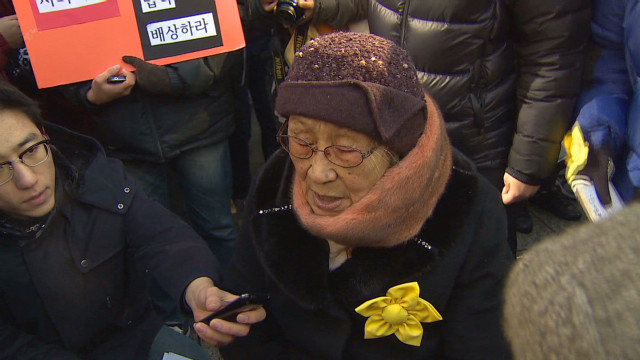
Last Sunday, Hwang Keum-ja, one of the few remaining Korean sex slaves of the Imperial Japanese Army (“comfort women”) passed away in a hospital in Seoul, South Korea. She died of lung and respiratory disease at the age of 89.

Forced into prostitution at the age of 16, Hwang was forced to serve in “comfort stations’ throughout World War II in several conquered countries. The life of these women can only be described as a living hell. On duty seven days a week, they were forced to have sex with as many IJA soldiers as showed up at the brothel. Hwang later said that she was unable to even stand up at the end of most weekends. She endured these torturous circumstances for several years before being abandoned in China at war’s end.

Making her way back to Korea, Hwang survived by collecting and selling garbage from the streets. Late in her life, she suffered hallucinations about being attacked in her home. She lived a life of great poverty, but this did not keep her from becoming one of the most outspoken advocates for the former sex slaves. Right up to the time of her death, Hwang regularly took part in demonstrations outside the Japanese embassy in Seoul demanding a formal apology from Japan and direct reparations to the individual women. There was precedent for their demands.

Early in the Pacific War, the U.S. government unconstitutionally imprisoned over 100,000 Americans of Japanese ancestry in internment camps. These citizens lost everything they had and had to endure concentration camp conditions for the remainder of the war. Nevertheless, thousands of the young men volunteered to serve in the U.S. armed forces. The army formed them into a segregated regimental combat team, the 442nd was the most decorated unit in the entire U.S. Army.

Later U.S. administrations recognized the horrible injustice visited on these Japanese-Americans. Congress passed a resolution of apology and appropriated funds to compensate the internees in part for their suffering. Today’s Americans are appalled that such a thing could have happened in our country. Over 200,000 Korean women were enslaved as IJA “comfort women.” Only 55 of these women are left alive. Hwang Keum-ja and her sisters are asking nothing more than what the U.S. provided to its internees.

My World War II novel, Hold Back the Sun, touches on the IJA sex slave system. A villainous Japanese officer plots to enslave the Dutch heroine as a “comfort woman” for causing him to lose face. He could not conceive of a more terrible fate. Neither could I as the author.

Note: Warren Bell is a historical fiction author with two novels released and for sale either for Kindle or in paperback from Amazon.com. Both are set during WWII, with Fall Eagle One taking place in Europe, and Hold Back the Sun is set in the war in the Pacific.

Friday, January 3, 2014

Shifting My Mind to a Different War


I spent yesterday afternoon polishing the draft of the first chapter of my new novel, Asphalt and Blood. To do so, I had to shift the focus of my mind forward a good twenty years. My first two novels, Fall EagleOne and Hold Back the Sun, take place during the Second World War. Asphalt and Blood tells the story of how the U.S. Navy’s Seabees helped the Marines retake Hue City during the 1968 Tet Offensive.

As I worked through my manuscript, I was mentally transported back to Vietnam during the war there. I spent seventeen months “in country” during two tours as the Operations Officer of a Seabee battalion. My second deployment was to Hue/Phu Bai to the north of Danang. We first arrived there less than six months after the Tet battle, and I became very familiar with the area over the next nine months. Talking with people who were there, I learned that Seabees had a significant presence during the fighting. Thus was born the spark that led to my present project.


After over forty years, my memories of Vietnam are still vivid. Most Americans think of that country as one big rain forest. This may be true of the far south, but the areas in which the Seabees mostly worked were quite different. The northern part of the former Republic of Vietnam is more like parts of Southern California, with rolling hills covered with scrub growth. The beaches along the South China Sea are wide bands of fine white sand—a beautiful tourist area waiting to be developed. The coastal plains around Hue are a sea of iridescent green rice fields stretching from the blue mountains inland to the sea. Given the climate and peace, the farmers there can grow three rice crops per year. These wiry people are some of the hardest working in the world. Our problem was that some were carrying AK-47s after dark.

Another reason I wanted to write Asphalt and Blood is to tell the story of the Seabees in popular fiction. Many of us who served there found our experiences far different from what most Americans envision. Reading press reports during the Tet Offensive, we began to wonder what war the reporters were viewing. What those of us there witnessed was akin to the Battle of the Bulge in 1944. The VC that came out to fight in big unit battles had some initial successes but were then savaged by American forces. From that point forward, the principal enemy was the North Vietnamese Army. Tactically, the Tet Offensive, launched over the objections of Field Marshall Giap, was a disaster. The media turned it into a political victory for the enemy.

I still hesitate to believe everything I see in press reports. Thirty years later, when members of my family were serving in Iraq, I asked them about their take on reports on that war. Their answers were that media reports bore small resemblance to what was actually happening. Don’t get me wrong. I am a staunch defender of press freedom. I just believe that reporters have a responsibility to “tell it like it is.”

Asphalt and Blood is scheduled for release next Labor Day.  As far as exhaustive research will allow, readers should expect an accurate description of the Battle of Hue City.

Note: Warren Bell is a historical fiction author with two novels released and for sale either for Kindle or in paperback from Amazon.com.  Both are set during WWII, with Fall Eagle One taking place in Europe, and Hold Back the Sun is set in the war in the Pacific.

Saturday, December 28, 2013

WHY I’LL REMEMBER 2013


The newspapers during the last few days have contained many reviews of 2013. Many of them are gloomy.  The U.S. Congress remained gridlocked during the year, stumbling from one crisis to another. The government was forced to shut down for several days. Fights over the implementation of the “Affordable” Health Care Act dominated politics and the news. Nelson Mandela passed away. The giants appear all gone, and mere humans are left to grapple with the problems of our times.

2013 was far kinder to me. When the year began, I was struggling to market my little-known novel, FALL EAGLE ONE, about a Nazi attempt to kill FDR. Sales were very modest, and I had few ideas about how to spread the word about my book. But I had asked my daughter, Karen Williams, to help me mount an Internet marketing campaign as my Christmas present. In late winter, we began the effort.

I already had a Facebook page, but it needed a lot of updating. Then Karen introduced me to Twitter. As soon as I grasped the “expanding ripples” effect of Twitter, I took to it readily.  Carefully studying how successful authors were using the media, I realized that one had to widely publicize the works of other authors to get them to publicize mine. I began devoting over an hour per day to Internet marketing. Meanwhile, Karen was building an author’s website for me.

By April 2013, FALL EAGLE ONE had climbed into the upper one percent of Kindle sales and has hovered in that range for the remainder of the year. It has 43 Amazon.com reviews with a 4.5-star out of 5 average rating. I spend about an hour and a half a day on marketing, but it has paid off handsomely.

I completed my second novel, HOLD BACK THE SUN, in the summer of 2013. Another World War II yarn, my new work follows the adventures of two U.S. Asiatic Fleet lieutenants during the opening months of the Pacific War. Karen built a YouTube trailer, which appears on my website. We launched the Kindle version of the new book in early August, and it quickly began to sell. When Amazon.com subdivided its bestseller lists in autumn, HOLD BACK THE SUN appeared as #8 in the historical fiction/Asian category. It soon climbed to #3 and has been in the upper 10 all year. It has 28 Amazon.com Reviews with a 4.3-star out of 5 average rating.

My third book, ASPHALT AND BLOOD, is already in the works. It will tell the story of how the U.S. Navy Seabees aided the Marines during the Battle for Hue City during the Vietnam War. My target launch is for Labor Day 2014.

I shall always remember 2013 as the year I could truthfully add the title, “author,” after my name.

Note: Warren Bell is a historical fiction author with two novels released and for sale either for Kindle or in paperback from Amazon.com.  Both are set during WWII, with Fall Eagle One taking place in Europe, and Hold Back the Sun is set in the war in the Pacific. Karen Williams, Marketing for Authors specializes in Marketing and PR for Independent Authors.  She can be reached through her website or at karenwilliamsmarketing@gmail.com.